
Hospitality
Inconsistent Cleaning Standards Are Costing You More Than You Think: The Hidden Risk in Miami Hotel Operations
How hospitality operators evaluate, deploy, and scale commercial robots.
Tell us your industry and we'll recommend 3-4 robots to shortlist.
We evaluate, certify, and service every robot we sell.
From marketing, sales, demonstrations, and proof-of-concepts through deployment, training, support — and even repair. Local teams, local inventory, same-day service.
By Elad Inbar, RobotLAB founder & CEO — a practical guide to adopting robotics that actually delivers ROI.
About the book →Discover how autonomous cleaning robots like Pudu CC1 and Gausium Phantas help hotels meet guest expectations, reduce costs and ensure spotless lobbies.
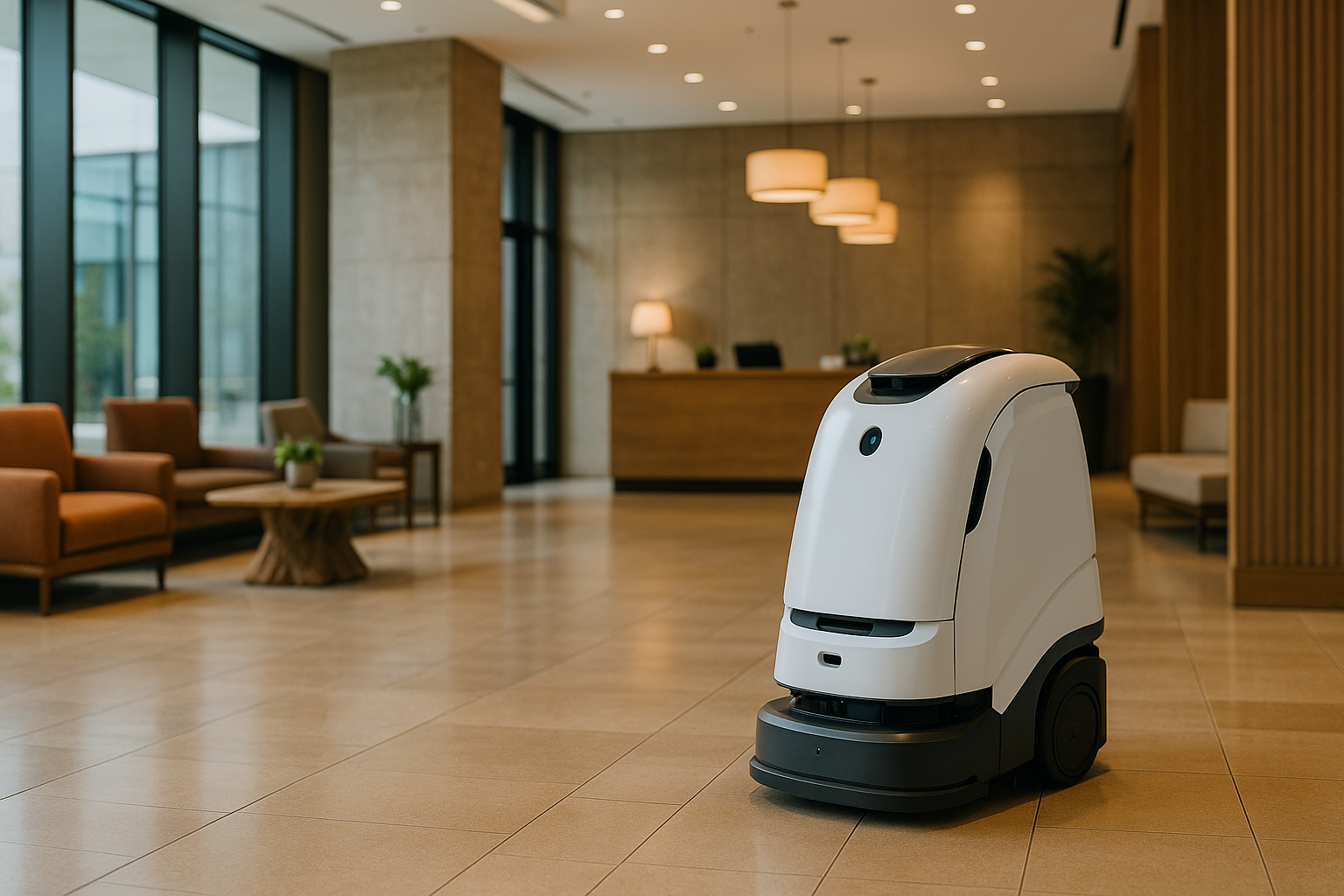
The hospitality industry prides itself on spotless lobbies, gleaming floors and guest rooms that invite you to relax. Yet behind the scenes, maintaining that level of cleanliness has become harder than ever. In the past decade, a perfect storm of labor shortages, rising wages and escalating guest expectations has left many hotel operators scrambling. Our Robotics Future, a book by RobotLAB founder Elad Inbar, notes that the gap between the number of people willing to perform physically demanding cleaning work and the volume of tasks required is widening. At the same time, travelers have learned to expect pristine environments around the clock. When staff numbers are thin and costs are high, how can hoteliers deliver?
Comparing today’s hotel cleaning robots shows there is a viable path forward. Autonomous floor‑care systems bring industrial‑grade cleaning power to hospitality spaces and run on schedules tailored to each property. Rather than replacing staff, they relieve them of repetitive floor work so teams can focus on high‑value guest experiences. In this article we explore why hotels need robotic cleaning, what to look for in a solution and how RobotLAB’s Pudu CC1 floor cleaning robot stands out.
Labor shortages across hospitality have persisted since the pandemic. The most affordable cleaning robot solutions for hotels article on RobotLAB’s blog frames it as a “triple threat” for hotel operators: a dwindling supply of workers, skyrocketing wages and ever higher expectations for cleanliness. With fewer people available, hotels must pay more to attract and retain cleaners. Yet guests now judge their entire stay on hygiene, from spotless lobbies to sterile conference rooms. As Inbar explains in Our Robotics Future, automation is not about replacing people but meeting demand that human teams can no longer satisfy. Robots handle the dull, dirty and dangerous tasks, while human staff focus on hospitality.
Manual floor care also carries hidden costs. Traditional machines require constant supervision, manual filling and dumping of tanks and time‑consuming maintenance. Shifts must be scheduled at odd hours to avoid disrupting guests. Even then, inconsistent cleaning patterns can leave corridors dirty by mid‑afternoon. For hotels with multiple floors and public areas, the overhead grows quickly. In contrast, autonomous cleaning robots can operate day or night, automatically refill and empty themselves and produce digital logs to prove coverage. They represent a new class of equipment: service robots that integrate into hotel operations like any other amenity.
Autonomous cleaning robots are not science fiction; they are working in hotels, convenience stores and offices today. The Cleaning Robots That Can Handle Busy Hotel Lobbies article on RobotLAB’s blog explains why they resonate with hospitality: robots provide 24/7 availability, lower operational costs, improved safety and consistent cleaning quality. Because they map spaces and avoid obstacles, they can safely navigate around guests and furniture. They operate quietly, making them suitable for lobbies and corridors even during peak hours. Most importantly, robots deliver the same high‑quality clean every cycle, ensuring that standards do not slip during busy periods.
From a financial standpoint, the return on investment is clear. RobotLAB’s ROI guide shows that leasing a cleaning robot typically costs around US $1,500–2,000 per month. A single robot can replace dozens of manual hours each day, resulting in ROI figures upwards of 300 % when labor savings and increased guest satisfaction are factored in. Digital cleaning reports provide proof of work for audits and can reduce liability, further contributing to savings. As cleaning demands continue to grow, these efficiencies become vital for keeping budgets under control.
Not all cleaning robots are created equal. When evaluating equipment for hotels, it is important to compare capabilities, autonomy and support. RobotLAB’s Pudu CC1 is a compact, fully autonomous floor cleaning robot specifically designed for public spaces. It combines four cleaning modes — sweeping, scrubbing, vacuuming and mopping — in a single machine. That means it can handle hard‑floor debris, deep‑clean spills and polish surfaces without requiring multiple devices. It also offers a silent mopping mode for late‑night guest hours, ensuring that cleaning remains unobtrusive.
A key differentiator for the CC1 is its integrated docking station. Between runs the robot automatically charges, refills clean water and dumps wastewater, enabling true hands‑off operation. Managers receive digital cleaning reports that verify coverage and time on task, which can be invaluable for brand standards and compliance audits. The CC1’s productivity is impressive; published specs list cleaning efficiency between 7,200 and 12,000 square feet per hour. For a typical hotel lobby of around 5,000 square feet, a single pass can be completed in under an hour, freeing staff for other duties.
In field deployments, such as at QuikTrip convenience stores, the CC1 runs automatically every four hours and returns hours of productive time to employees. For hotels this translates to consistent cleanliness across lobbies, ballrooms and conference centers. The robot’s visual and LiDAR navigation lets it navigate tight corridors and busy spaces with ease. Because the docking station handles charge and water management, the robot can run multiple cycles each day without human intervention, something manual machines cannot match.
RobotLAB backs the CC1 with training, service and a national network of franchises. Hotels can deploy one robot per property or scale to fleets across multiple locations, secure in the knowledge that a standardized solution is supported nationwide. Leasing options make high‑end automation accessible to independent hotels as well as major chains. For those comparing cleaning robots for the first time, the CC1 sets a benchmark for performance and autonomy.
While the CC1 shines in public spaces, some hotels may also need robots for guest corridors, elevators or confined areas. Gausium’s Phantas offers an excellent complement. It is an all‑in‑one floor cleaning solution with advanced AI navigation, strong passability, zero‑distance edge cleaning and flexible path planning. Multiple sensors, including ultrasonic and LiDAR, help it localize precisely and avoid obstacles, while its slim profile allows it to fit under furniture and along walls. Phantas can be configured for different tasks and patterns, making it a versatile choice for hallways and hard‑to‑reach corners. Pairing a Phantas in corridors with a CC1 in public areas can create a comprehensive, autonomous cleaning program.
There are also specialized robots for room service, delivery and disinfection that hotels can consider. RobotLAB’s portfolio spans dozens of service and reception robots. When comparing options, prioritize units that offer robust autonomy, support services and verifiable case studies. Avoid generic or unverified products; partner with a provider who understands hospitality workflows and can integrate robots smoothly into your operations.
Hotels that invest in robotic cleaning now will not only keep their properties immaculate but also free staff to focus on delivering the personalized experiences that guests remember. RobotLAB’s team can evaluate your property, propose the right mix of autonomous cleaners and support you throughout deployment. Comparing hotel cleaning robots is about more than gadgets — it is about building a sustainable future for hospitality. Contact RobotLAB to see how the Pudu CC1 and complementary robots can transform your housekeeping program.
Miami hotels boost guest confidence with autonomous cleaning in lobbies and corridors, ensuring consistent cleanliness, freeing staff for…
Explore how UV‑C disinfection robots and contactless service solutions protect guests and staff in hotels while enhancing hygiene…
Lidia is an AI assistant. This conversation is stored and shared with the RobotLAB sales and support teams. Privacy policy
Chatting as · Not you?
You choose which categories of cookies are stored on your device. Strictly-necessary cookies are required for the site to function and cannot be disabled. Read more in our Privacy Policy.
Session, security, and the consent record itself. Required for the site to operate.
First-party tracking (Mautic, on t.robotlab.com) so we understand which pages and products visitors engage with and improve the site over time.
Advertising pixels (Google Ads, Meta Pixel) used to measure ad performance and show relevant ads on partner sites. Turning this off opts you out of CCPA "sale" of personal information.