
Uncategorized
Autonomous Cleaning Robots for Schools on Operating Budget
How K-12 districts add autonomous cleaning without a capital bond. Real district proof, per-scrubber capacity, and how to…
How hospitality operators evaluate, deploy, and scale commercial robots.
Tell us your industry and we'll recommend 3-4 robots to shortlist.
We evaluate, certify, and service every robot we sell.
From marketing, sales, demonstrations, and proof-of-concepts through deployment, training, support — and even repair. Local teams, local inventory, same-day service.
By Elad Inbar, RobotLAB founder & CEO — a practical guide to adopting robotics that actually delivers ROI.
About the book →A K-12 facilities director walkthrough. Where autonomous robots run, where custodians stay, and how the overnight schedule actually changes.
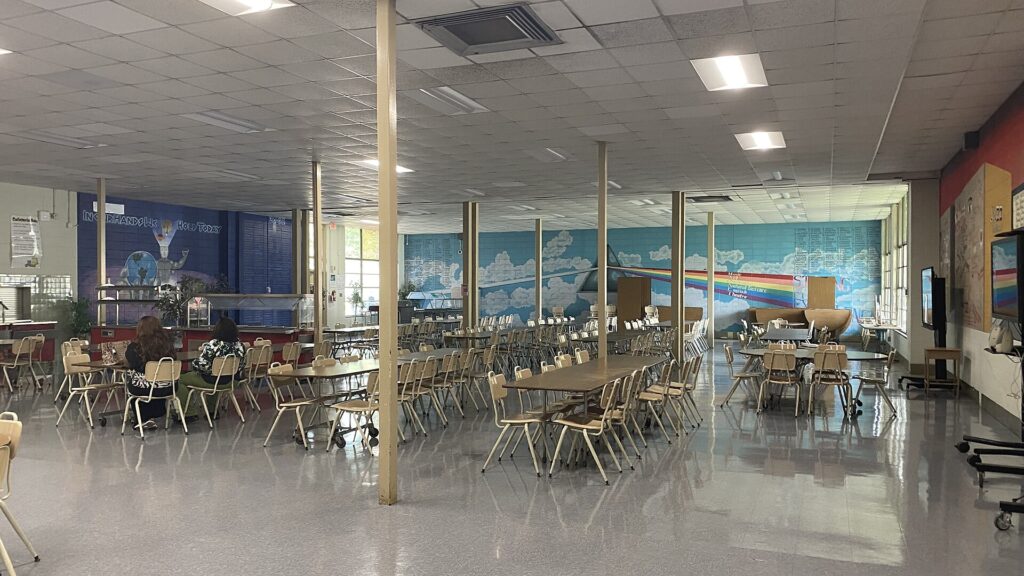
It is what changes at 9 p.m. on a Tuesday. Which rooms do the robots take. Where does the custodial team stay in charge. Who resets the routes when the master schedule shifts for a homecoming game. This post walks through what running the fleet looks like from a facilities director chair, using a Midwest school district as the operational reference.
A Midwest school district runs a RobotLAB autonomous cleaning fleet across a multi-building campus footprint that serves roughly 20,000 students. The fleet includes an autonomous scrubber and an autonomous vacuum chassis, selected to match the district’s actual floor mix. Per OEM spec, a single scrubber covers approximately 8,611 square feet per hour. The rest of this post is about how a facilities director actually uses that.
The robots take the routine square footage. The custodial team keeps the work that still needs human judgment. That reallocation is the entire point of the fleet.
These are the zones that used to eat the biggest slice of nightly labor and were the first to get skipped when the schedule was short.
Custodial hours do not go away. They shift toward the work parents and boards actually notice when it slips.
The rule of thumb we use with facilities directors: if the floor is a big open shape with predictable furniture, the robot can run it on a mapped route. If the space is packed with movable desks, cords, and shifting layouts, the custodial team stays on it.
“Fleet coverage stops fluctuating with nightly staffing levels.”
The sentence facilities directors repeat back to us
Running a robot fleet does add work. It also removes more than it adds. Fifteen to thirty minutes a night per building versus the labor time saved on routine floor coverage.
New furniture, portable classroom shifts, or a lockdown drill layout means the route needs a check. Usually five minutes per building.
Check missed routes, clear stuck alerts, log any exception. Runtime and coverage data goes straight to the board packet.
Empty and refill water tanks on the district’s chosen schedule. Coordinate any hardware issues with the local RobotLAB franchise, not a national call center.
The RobotLAB Care Pack covers the training so a custodian who has never touched a robot can be running the fleet within a shift.
RobotLAB owns service through the local franchise. When a robot needs a brush, a squeegee, a battery, or a mapping tune-up, the local franchise sends someone. Software updates come over the air. The facilities IT team is not provisioning a server or chasing firmware.
The multi-year Care Pack bundles setup, mapping, training, software updates, and on-site service into a single number. No per-visit service invoice hiding inside the deployment.
Franchise service centers nationwide. A district in Illinois works with the Chicago area team. A district in Texas works with the Dallas or Houston area team.
Runtime, coverage, uptime, maintenance history, and per-building performance in a format that goes straight to a board packet.
The district deployed the fleet across a multi-building campus footprint. Two chassis types selected to match the district’s actual floor plan, not to standardize on one platform.
The autonomous scrubber covers hard-surface floors at a rate of approximately 8,611 square feet per hour per OEM spec. The district runs a fleet of these across the campus. The autonomous vacuum chassis handles carpeted and classroom floors on the same documented schedule.
No capital bond. No special board vote. Setup, mapping, custodial training, software updates, and on-site service through the local franchise are all covered. Routine coverage runs autonomously. Custodial team focuses on the work that still needs human judgment.
The right count comes from your floor plan, not a formula. Share enrollment, building count, and rough square footage. We size the fleet against the actual campus, not a generic SKU list, and the quote arrives in one business day.
Yes, when the district wants that. The chassis are safe for daytime operation and are designed to detect people and obstacles. Most districts run the fleet overnight or between bell schedules to keep hallways clear during passing periods.
The chassis use LiDAR and depth sensors to keep clear of walls and obstacles. Bumper contact happens rarely, and the local franchise service handles any cosmetic follow-up. There is no charge back to the district for routine service under the Care Pack.
No. Deep scrub, strip, and refinish work is still a periodic project. The fleet handles the daily and weekly routine. The floor buffer program stays on its regular cycle.
No. The robots take the routine square footage. Custodial staff keep their hours and shift to the work parents and boards actually notice: restrooms, surface sanitation, event resets, and detail cleaning between periods.
Nothing. The Care Pack covers setup, mapping, training, software updates, and on-site service through the local franchise. Your facilities IT team is not provisioning a server or babysitting firmware.
How K-12 districts add autonomous cleaning without a capital bond. Real district proof, per-scrubber capacity, and how to…
quick summary of what the content is
RobotLAB
Lidia is an AI assistant. This conversation is stored and shared with the RobotLAB sales and support teams. Privacy policy
Chatting as · Not you?
You choose which categories of cookies are stored on your device. Strictly-necessary cookies are required for the site to function and cannot be disabled. Read more in our Privacy Policy.
Session, security, and the consent record itself. Required for the site to operate.
First-party tracking (Mautic, on t.robotlab.com) so we understand which pages and products visitors engage with and improve the site over time.
Advertising pixels (Google Ads, Meta Pixel) used to measure ad performance and show relevant ads on partner sites. Turning this off opts you out of CCPA "sale" of personal information.