Restaurant
Where can I find the latest restaurant automation solutions for my new restaurant?
How hospitality operators evaluate, deploy, and scale commercial robots.
Tell us your industry and we'll recommend 3-4 robots to shortlist.
We evaluate, certify, and service every robot we sell.
From marketing, sales, demonstrations, and proof-of-concepts through deployment, training, support — and even repair. Local teams, local inventory, same-day service.
By Elad Inbar, RobotLAB founder & CEO — a practical guide to adopting robotics that actually delivers ROI.
About the book →Explore essential equipment and automation technologies for modern restaurants, with a spotlight on Pudu Bellabot service robot enhancing dining experienc
Across the restaurant industry, there is a growing imperative to modernize operations without sacrificing service quality. Labor shortages and shifting customer expectations are prompting restaurateurs to re‑imagine how kitchens and dining rooms run. Automation isn’t about replacing staff; it’s about solving persistent operational challenges while empowering people to focus on hospitality. From the front of house to the kitchen, robotic solutions are transforming modern dining into a more efficient, safe and engaging experience.
Staffing a restaurant has become increasingly difficult. During the pandemic, more than one million restaurant and hotel workers quit their jobs and many businesses still struggle to hire. High turnover inflates training costs and inconsistent staffing can erode service quality. At the same time, rising wages squeeze margins, particularly for small and mid‑size eateries. Robots cost roughly $3 per hour to operate, far less than minimum wage in many regions. Beyond labor, restaurants must meet heightened health and safety standards. Contactless delivery, timely sanitation and error‑free order fulfilment have become must‑haves for customers and regulators.
Today’s diners also expect speed and consistency. Slow table turnover reduces revenue, and mistakes in orders can damage reviews. Automation offers a way to handle repetitive, time‑consuming tasks—such as bussing tables, delivering food and refilling drinks—without compromising the dining experience. In fact, many guests find interactions with robots novel and memorable.
Automation refers to using robotic hardware and software to carry out tasks throughout a restaurant without direct human input. These solutions fall into several categories:
These technologies don’t eliminate the need for human employees; rather, they augment staff by taking over labor‑intensive duties. Employees can then focus on creating an exceptional dining experience, personalizing service and handling complex situations.
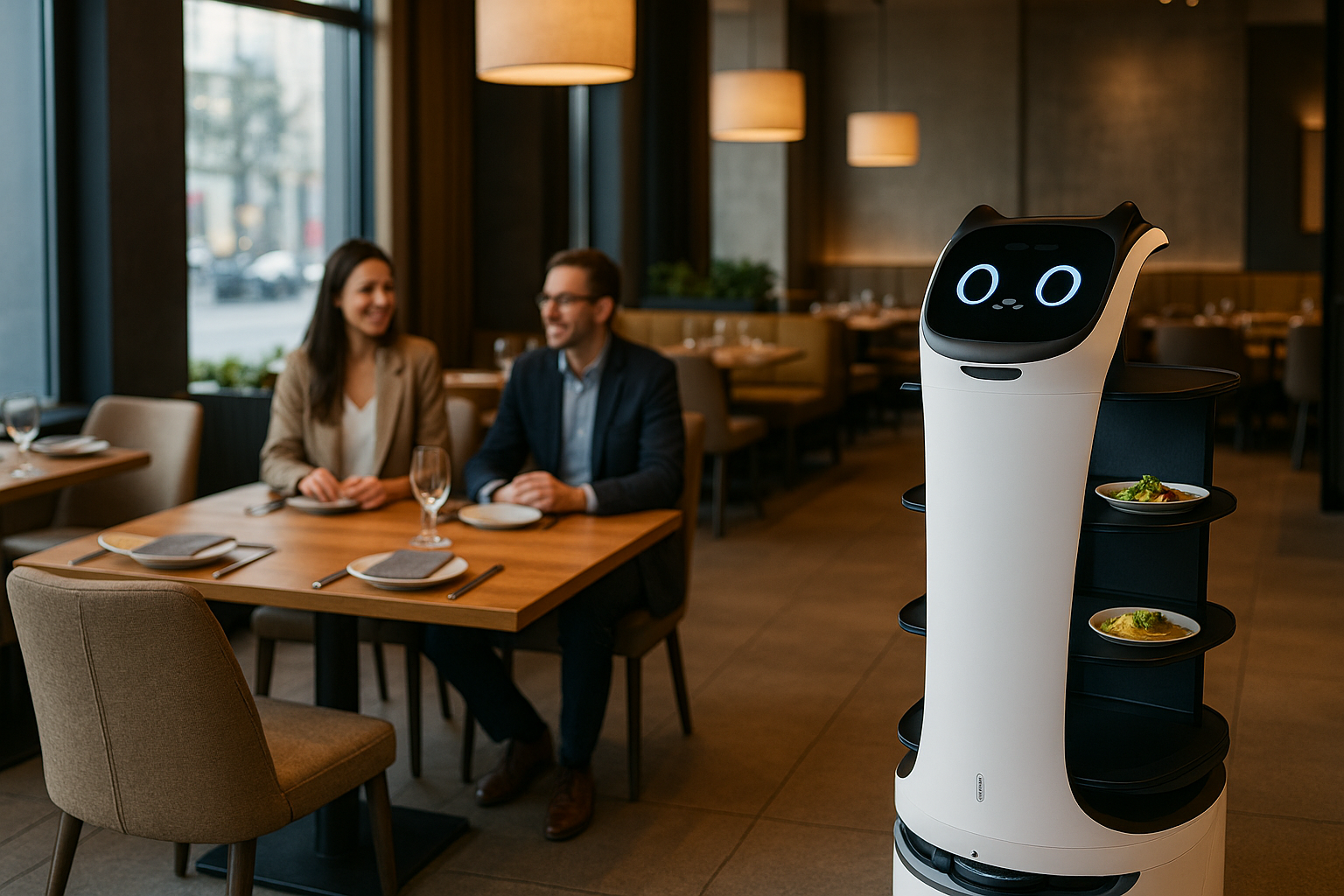
One of the most exciting service robots available today is the Pudu Bellabot. Designed by Pudu Robotics and offered by RobotLAB, Bellabot is a sleek autonomous delivery robot that elevates the dining experience. According to the product specification, Bellabot is a versatile service robot that assists and engages customers across industries. Its mission in restaurants is to efficiently deliver food and beverages, interact with guests and provide a unique and memorable dining experience.
Bellabot features four shelves that can each hold two 10‑inch plates, allowing it to carry multiple orders at once. It navigates autonomously using lidar and RGBD sensors, avoiding obstacles and stopping gracefully when humans cross its path. The robot’s friendly cat‑inspired design includes expressive eyes and an interactive screen, making it approachable for diners of all ages. Bellabot also communicates using voice prompts and lights to indicate when food is ready to be collected.
Beyond its charming appearance, Bellabot boasts robust technical specifications. It measures 565 × 537 × 1290 mm and weighs 66 pounds. A rechargeable battery powers it for 10–12 hours and fully recharges in 4–5 hours. These capabilities allow restaurants to operate Bellabot through multiple meal services without interruption. The robot’s autonomous navigation system enables it to efficiently traverse busy dining rooms, while its customizable appearance can be tailored to match brand aesthetics.
For restaurant owners, Bellabot delivers tangible benefits. By taking over the repetitive task of running food, servers can focus on customer interaction and upselling. The robot reduces labor costs, shortens wait times and improves order accuracy by ensuring that meals arrive promptly and correctly. Because Bellabot can carry multiple orders simultaneously, it increases throughput during peak hours. Guests enjoy the novelty of a robot delivering their meals, which enhances the overall dining experience and encourages social media sharing. As one industry article notes, robots like BellaBot can provide an appealing, intuitive experience that many guests prefer.
Adopting automation requires thoughtful planning. Here are several considerations for restaurateurs exploring robotic solutions:
Robotic solutions are still in their early adoption phase, yet they are already demonstrating impressive returns. Case studies show that restaurants employing food runners like PuduBot or fry cooks like Flippy can dramatically increase productivity while saving on labor costs. Touchless delivery and autonomous table service, once rare, are becoming familiar sights in restaurants around the world.
As technology advances, robots will become more versatile and affordable. Sophisticated artificial intelligence and computer vision will enable service robots to handle complex interactions, recognize regular customers and personalize recommendations. Integration with reservation systems and POS platforms will allow seamless coordination between kitchen, robots and human staff. In the near future, we may see fully automated sections of dining rooms where robots take orders, prepare meals and deliver them without human intervention—yet hospitality professionals will always remain vital for creating memorable experiences.
Ultimately, restaurant automation isn’t about replacing people; it’s about unlocking efficiency and creativity. By delegating repetitive tasks to robots, restaurants can elevate service, improve profitability and delight guests. For establishments seeking a proven first step into automation, the Pudu Bellabot offers a turnkey solution that blends functionality with charm. Modern dining thrives on consistent quality and engaging experiences—automation provides the essential equipment to deliver both.
Kura Sushi deploys 120+ KettyBots across 60+ locations with RobotLAB. With 4,000 robot work-hours and 2,400 miles traveled…
Explore restaurant automation—from delivery and bussing robots to kitchen and service automation—and see how RobotLAB’s Servi+ boosts efficiency.
Lidia is an AI assistant. This conversation is stored and shared with the RobotLAB sales and support teams. Privacy policy
Chatting as · Not you?
You choose which categories of cookies are stored on your device. Strictly-necessary cookies are required for the site to function and cannot be disabled. Read more in our Privacy Policy.
Session, security, and the consent record itself. Required for the site to operate.
First-party tracking (Mautic, on t.robotlab.com) so we understand which pages and products visitors engage with and improve the site over time.
Advertising pixels (Google Ads, Meta Pixel) used to measure ad performance and show relevant ads on partner sites. Turning this off opts you out of CCPA "sale" of personal information.