
Automation isn’t replacing people. It’s giving time back.
If you run operations today, you’re balancing the same pressures everywhere: staffing gaps, rising wages, and higher expectations for consistency. The problem isn’t effort—your team is already stretched. The problem is time.
The real value of automation isn’t “doing more with less.” It’s reallocating hours away from repetitive, low-leverage tasks and into the work only people can do: guest interaction, exception handling, quality checks, and higher-touch service.
RobotLAB’s 2025 results show what that looks like at scale.

What 2025 proved: robots don’t replace staff— they cover the hours you can’t
Across deployments, autonomous robots handled repeatable work that normally pulls people away from priority responsibilities.
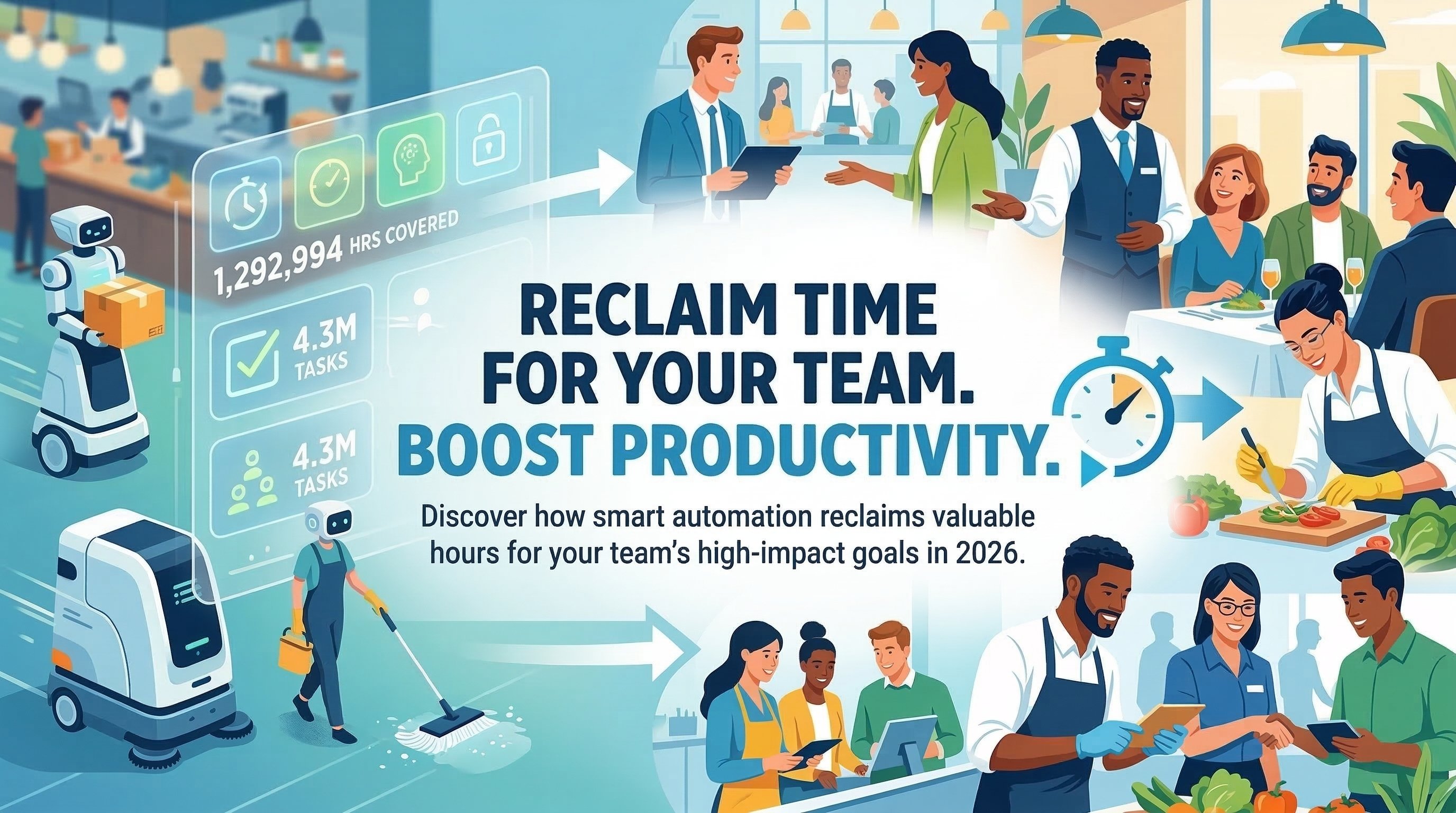
1,292,994 total hours covered
That’s time reclaimed from repetitive labor—time your team can redirect to higher-impact work.
Put another way:
622 full-time employees equivalent
Not as a headcount substitute—as operational coverage that helps teams stay on pace without burning out or sacrificing standards.
And when you translate that into wage value:
$19.4M–$32.3M estimated wage value
Based on hourly wage ranges of $15–$25, that’s the measurable scope of tasks shifted from repetitive labor to autonomous execution.

Where those reallocated hours actually go
When repetitive tasks are consistently covered, teams can move up the value chain. In practice, customers typically reallocate time into:
- Customer-facing service (more presence on the floor, faster response, better experience)
- Quality assurance (spot checks, standards enforcement, detail work)
- Restocking and readiness tasks (prepping spaces before peak periods)
- Exception handling (when something unusual happens, people solve it faster)
- Training and onboarding (less chaos means more time to build skills)
This is what “automation amplifies employees” means: robots handle the repeatable base layer, people handle the judgment layer.
Proof at the task level: what robots carried, cleaned, and completed
Automation works when it’s trusted daily—not when it’s stuck in pilot mode. 2025 results reflect real utilization:
Delivery robots: repeatable movement, dependable coverage
-
-
-
-
-
-
-
-
-
-
-
4,371,991 tasks completed
This is the kind of volume that reduces “task switching” across teams—fewer interruptions, fewer long walks, fewer bottlenecks.
-
-
-
-
-
-
-
-
-
-
-
93.9 million lbs moved
Heavy and frequent transport is exactly the kind of work that drains time and energy. When robots take it over, people can stay focused on higher-leverage responsibilities. -
87,096 miles traveled
That’s not novelty mileage. That’s routine operations—executed consistently. -
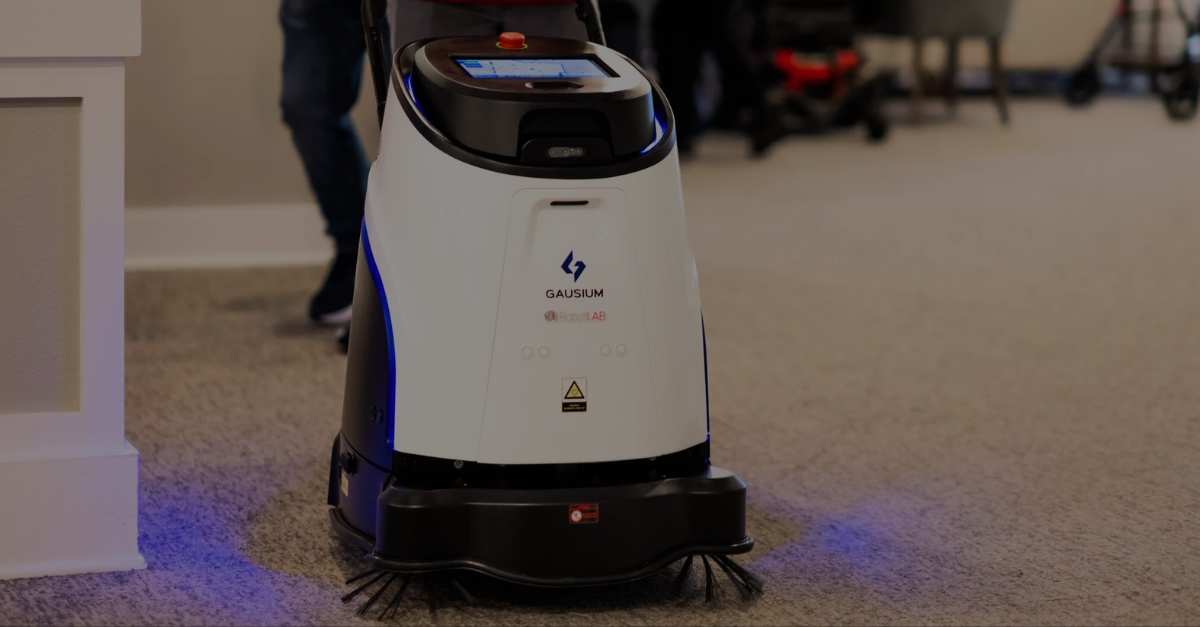
Cleaning robots: predictable consistency, less last-minute scrambling
-
139.2 million sq ft cleaned
Large-scale coverage that helps teams maintain standards without pulling staff off core responsibilities. -
33,770 hours of runtime
Autonomous cleaning time that supports readiness—especially during understaffed shifts. -
20,143 sq ft average area per task
Coverage you can schedule and measure—so cleaning becomes a system, not a scramble.
Why this matters now: the “service expectation gap”
Customers expect consistent quality even when staffing is inconsistent. That gap creates stress: teams end up forced to choose between service and standards.
Automation helps close the gap by ensuring baseline tasks get done—so people can focus on the higher-touch work that makes the difference.
What to do next: map automation to your hours
If you’re planning 2026, the best first step isn’t “buy a robot.” It’s identify which hours you want back:
- Which repetitive tasks regularly pull people off priority work?
- Where do you see the most “task switching” and wasted walking time?
- Which standards slip first when you’re short-staffed?
- Where would reallocated hours create the biggest customer impact?
RobotLAB can run a quick operational assessment and show what reallocation could look like for your sites.
Want to see how many hours you could save? Fill out the form below and we'll share a simple intake to estimate based on your environment.






 Too much to read? Don't have time?

.webp?width=124&height=124&name=image%20(1).webp)
.webp?width=169&height=87&name=image%20(2).webp)