
Your Warehouse Isn’t Unstable. It’s Overdependent on Labor: The Hidden Risk in Miami Operations
May 19, 2026
The real risk isn’t demand. It’s dependency.
In warehouses across Miami and South Florida, demand volatility is expected. Seasonal peaks, shifting volumes, and tight delivery windows are part of the business.
But what many operational leaders are now facing is a different kind of risk, one that is harder to control:
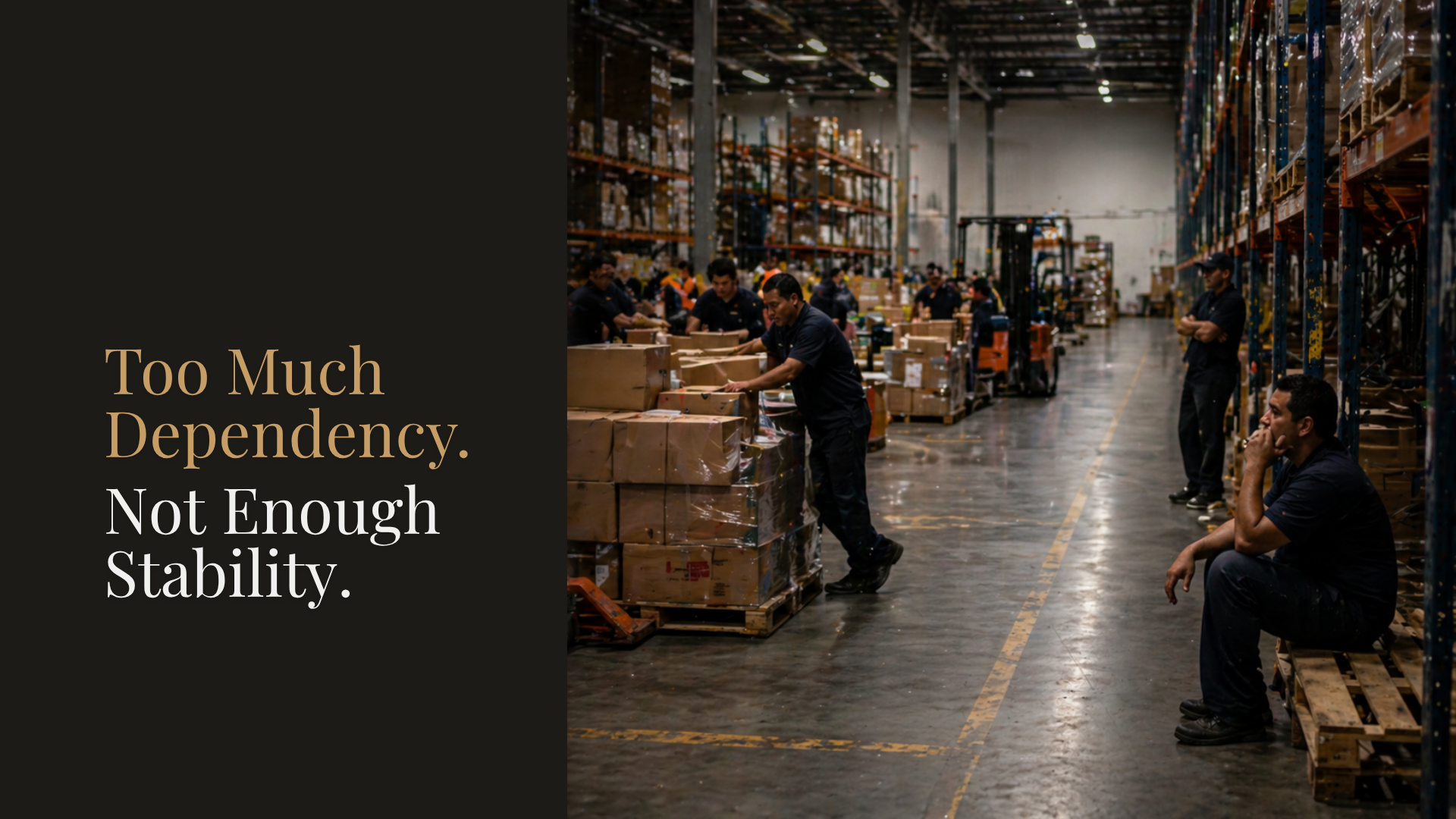
too much dependency on human availability to sustain daily operations.
When your operation depends on who shows up, stability becomes unpredictable.
Labor variability is now a structural challenge
This is no longer a temporary issue.
Absenteeism, turnover, and fluctuating workforce availability have become part of the operating environment.
- Teams start shifts understaffed
- Productivity varies significantly day to day
- Performance depends on experience levels available
What used to be an exception is now the baseline.
And that creates fragility.
Fragile operations break under pressure
A stable operation absorbs variability. A fragile one amplifies it.
When labor dependency is high:
- Small disruptions create major delays
- Bottlenecks appear unexpectedly
- Output becomes inconsistent across shifts
The result is not just inefficiency, it is unpredictability.
And unpredictability is what disrupts service levels, delivery commitments, and customer trust.
The illusion of control through staffing
Many operations attempt to solve this with more hiring.
But more people do not guarantee stability.
- Training takes time
- Turnover resets productivity
- Workforce quality remains inconsistent
You may feel in control because positions are filled. But operationally, variability still exists.
“If your operation depends on perfect attendance to perform well, it’s not optimized, it’s exposed,” as Alberto Marcano – Branch President of RobotLAB Miami, explains.
Consistency cannot rely on human variables alone
People are essential. But variability is human.
Fatigue, experience, pace, and external factors all influence performance.
When critical workflows depend entirely on these variables:
- Execution becomes inconsistent
- Planning becomes reactive
- Scaling becomes difficult
Operational leaders are not just managing processes. They are managing uncertainty.
Stability comes from controlled systems, not effort
The most resilient warehouse operations are shifting their mindset.
They are not trying to eliminate labor challenges. They are reducing dependency on them.
This means:
- Structuring workflows that do not break under variability
- Creating predictable execution regardless of staffing fluctuations
- Ensuring continuity even when conditions change
This is not about replacing people. It is about stabilizing the system they operate within.
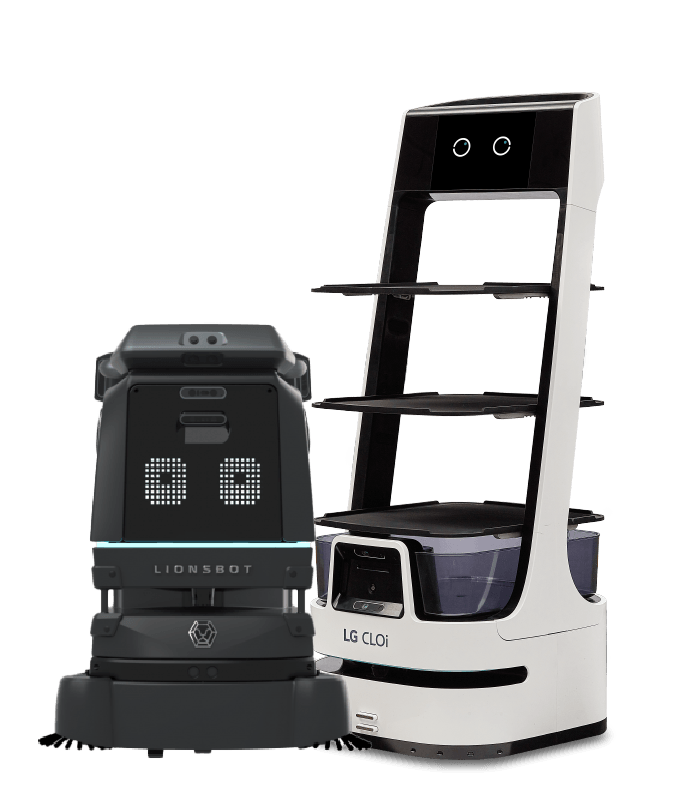
Automation through industrial delivery robots, as a stabilizing layer
Forward-thinking warehouses in Miami have to introduce industrial delivery robots not just for efficiency, but for stability.
By assigning repetitive, predictable tasks to autonomous delivery robots:
- Critical workflows remain uninterrupted
- Output becomes consistent across shifts
- Teams are freed to focus on tasks that require decision-making
Automation becomes the layer that absorbs variability.
It does not remove humans. It protects operations from human fluctuation.
From fragile to resilient operations
The difference between struggling warehouses and high-performing ones is not effort. It is structure.
When dependency on labor is balanced with controlled systems:
- Operations become predictable
- Throughput stabilizes
- Growth becomes manageable
That is when an operation moves from reactive to resilient.
The competitive advantage is operational stability
In a market like Miami, Florida; where speed and reliability define success, stability is not optional.
It is a competitive advantage.
Warehouses that reduce their dependency on variable inputs gain something powerful:
control.
And control is what allows consistent performance, regardless of conditions.
If you are evaluating how to reduce operational risk without increasing complexity, this is the moment to rethink how your workflows are structured.
Schedule a 15-minute strategic conversation, to see how autonomous industrial delivery robots can fit in your current operation:
Schedule a 15-minute strategic conversation
Discover how warehouse operations in Miami and South Florida can build resilient, stable systems that perform consistently, day after day.






 Too much to read? Don't have time?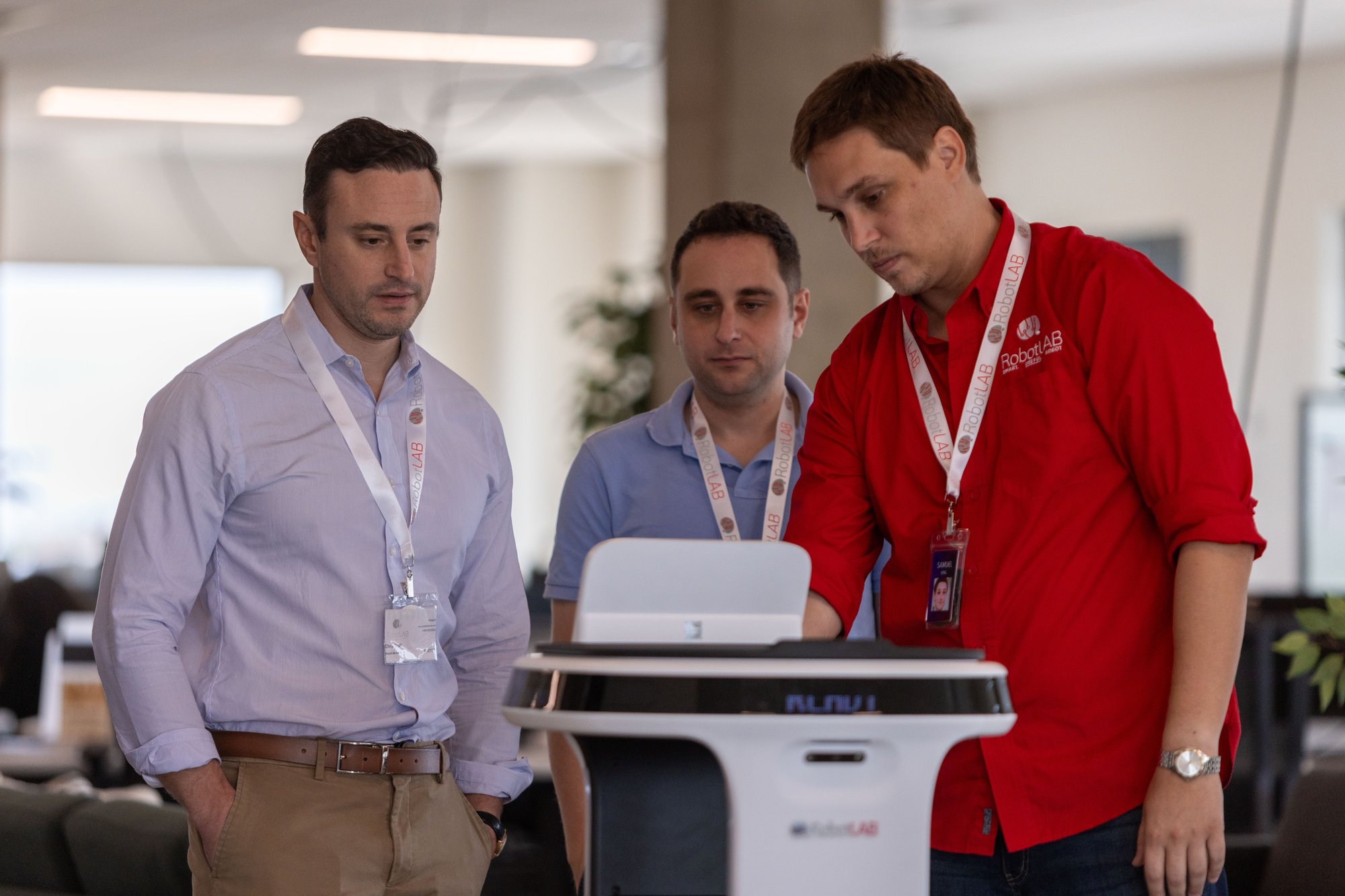

.webp?width=124&height=124&name=image%20(1).webp)
.webp?width=169&height=87&name=image%20(2).webp)