
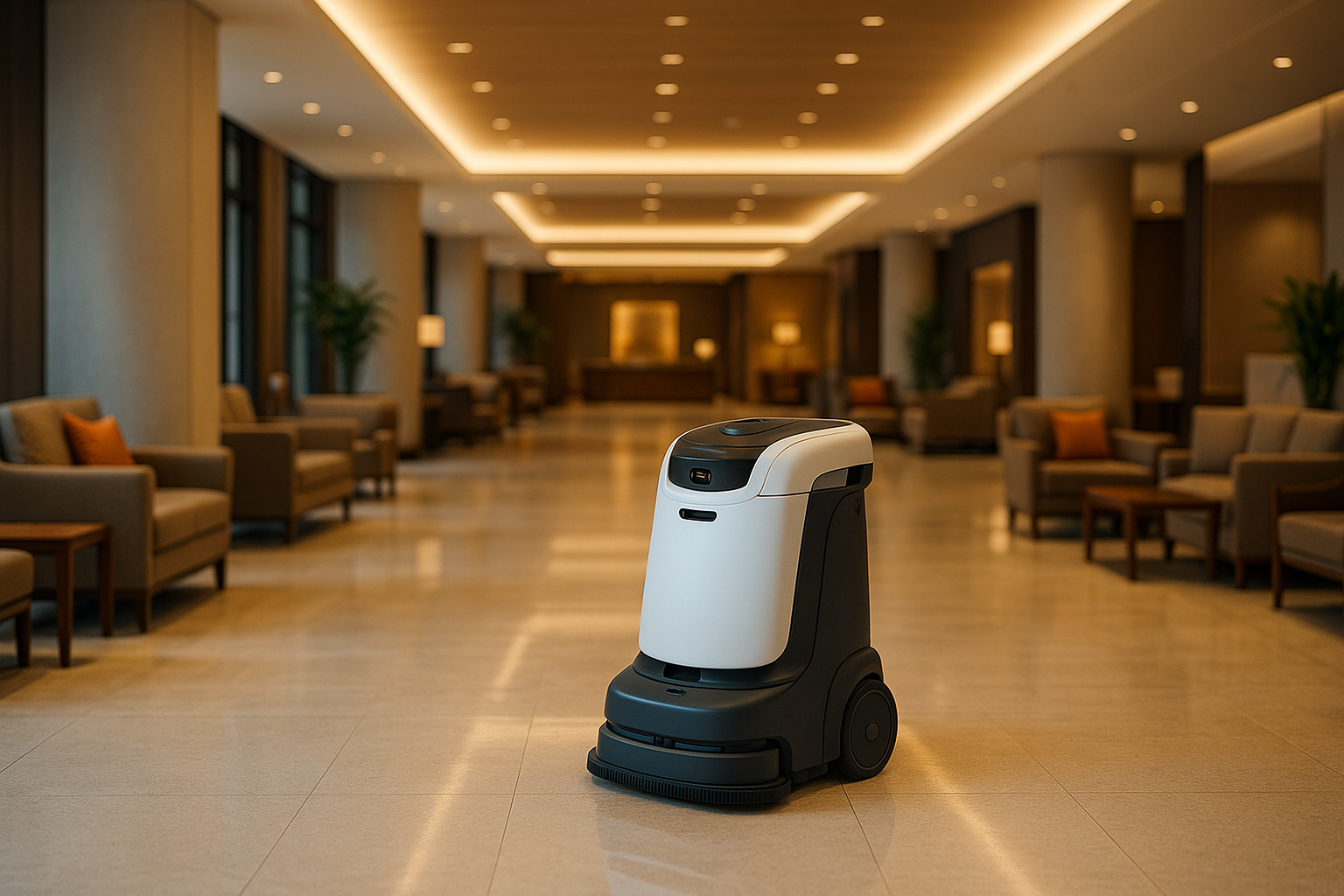
Searching for top hospitality cleaning robots to boost housekeeping efficiency
Nov 7, 2025
Introduction
Housekeeping is the invisible backbone of the hospitality industry. Whether a boutique hotel or a bustling convention center, guests immediately judge their stay by how clean and welcoming the property feels. In today’s post‑pandemic travel landscape, expectations around sanitation and efficiency have never been higher. According to RobotLAB’s hospitality insights, guest expectations for cleanliness and safety are skyrocketing, and regulatory compliance is non‑negotiable. Managers are under pressure to deliver spotless rooms, polished lobbies and disinfected public areas — all while controlling labor costs and maintaining a five‑star reputation. Traditional housekeeping teams can struggle to keep up with these demands, especially as operating budgets tighten and staff shortages continue. Many operators are therefore looking for innovative, scalable solutions to maintain impeccable standards and free their teams to focus on guest‑facing service.
Why housekeeping needs an upgrade
Cleaning large properties is labor‑intensive, repetitive and hard to scale. Big hotels with ballrooms and conference centers often need overnight crews to turn spaces between events. Even small hotels must ensure corridors are vacuumed, lobbies mopped and high‑touch surfaces disinfected multiple times a day. When you factor in rising wages and staff turnover, the economics become challenging. Elad Inbar notes that in massive spaces, staffing enough people to keep up is “expensive and unreliable”. Humans can overlook areas when tired and may not be available during off‑peak hours. Robots, on the other hand, never take breaks, deliver consistent coverage and can run 24/7 with predictable operational costs. A cost comparison from RobotLAB shows that a Vac 40 cleaning robot can clean 120,000 sq ft per day for about $29—just $0.24 per 1,000 sq ft. A human performing the same work costs roughly $6 per 1,000 sq ft. That’s a 25× difference in labor cost and illustrates why automation is more than a novelty; it’s a financial necessity.
Types of cleaning robots for hospitality
The hospitality sector is adopting several categories of autonomous cleaning robots, each tailored to specific surfaces and tasks:
- Autonomous vacuum robots – Ideal for carpeted hallways, ballrooms and meeting rooms, these robots quietly collect dust and debris without interrupting guests. Many models clean up to 30,000–50,000 sq ft per charge.
- Floor‑scrubbing robots – For hard‑surface lobbies, kitchens and service corridors, scrubbers handle wet mopping, vacuum extraction and drying in one pass. They replace mop‑and‑bucket routines with superior hygiene and consistent results.
- UV disinfection robots – Equipped with powerful UV‑C lights, these robots kill bacteria and viruses in high‑traffic areas. They’re especially useful for public restrooms and elevator lobbies where sanitation is critical.
- Outdoor and parking lot robots – Autonomous sweepers patrol covered garages and walkways to remove leaves, sand and trash. Keeping exteriors clean enhances first impressions and reduces reliance on landscaping crews.
- Delivery robots – While not cleaners per se, robots that deliver linens, amenities or room service reduce back‑of‑house foot traffic and free staff to focus on deep cleaning tasks.
Benefits of robotic cleaning
Deploying cleaning robots offers immediate operational and guest‑experience benefits:
- Consistency and quality – Robots follow predefined routes and never miss a spot, delivering uniform results every time.
- Improved safety and satisfaction – UV‑C disinfection robots reduce pathogens on surfaces, boosting guest confidence and meeting heightened hygiene expectations.
- Reduced labor costs – Automating repetitive tasks lowers operational expenses and frees staff to focus on personalized service. ROI calculations show robots cost pennies per square foot.
- 24/7 coverage – Robots clean during off‑peak hours without overtime charges, ensuring hallways and lobbies remain pristine around the clock.
- Data‑driven insights – Modern robots capture cleaning routes and usage data so managers can optimize schedules and direct staff where they’re needed most.
Product spotlight: Gausium Phantas all‑in‑one cleaning robot
Among the many options available, the Gausium Phantas cleaning robot stands out as a versatile, hotel‑friendly solution. Priced competitively around $22,490, this robot integrates four cleaning modes — sweeping, dust mopping, vacuuming and scrubbing — into one compact unit. Its design allows it to transition seamlessly from carpeted hallways to hard‑floor lobbies without manual intervention.
Phantas excels in hospitality environments for several reasons:
- Compact, strong passability – The robot’s slim profile lets it pass through narrow aisles and under tables, reaching areas traditional machines can’t.
- Zero‑distance edge cleaning – Side brushes and high‑precision sensors allow Phantas to clean right up against walls and baseboards.
- Flexible path planning – Multiple path modes (zigzag, square spiral, and more) let operators tailor cleaning patterns to different spaces.
- Real‑time localization and 3D perception – Advanced LiDAR and camera sensors help Phantas navigate complex layouts, avoiding obstacles and thoroughly cleaning 90° corners.
- Hotel‑specific value – RobotLAB notes that Phantas helps hotels improve efficiency, reduce labor costs and maintain high standards of cleanliness and hygiene. With measurable proof of performance and remote monitoring, operators can demonstrate compliance with cleanliness standards to guests and regulators.
The Phantas package includes the robot, a charging dock and a water tank. Its battery life ranges from 4.5 hours in scrubbing mode to 12 hours when sweeping, allowing properties to schedule multiple cleaning sessions per day.
How to choose and implement the right cleaning robot
Selecting the best robot for your property requires more than comparing price tags. RobotLAB’s guidance for budget‑conscious operators highlights criteria beyond upfront cost:
- Prioritize robots that clean large square footage per charge cycle.
- Look for smart scheduling and utilization features to maximize uptime.
- Ensure mapping and navigation are user‑friendly so staff can deploy robots with minimal training.
- Choose vendors with proven reliability, comprehensive warranties and robust support.
Integration also matters. Align cleaning schedules so robots operate during low‑traffic hours and avoid interference with guests. Train employees on basic robot operation and troubleshooting. Finally, collect guest feedback to refine your deployment and promote your investment as a differentiator in marketing materials.
Conclusion
Hotels that invest in autonomous cleaning robots gain more than shiny floors — they unlock operational efficiency, consistent quality and measurable ROI. As guest expectations rise and labor costs climb, automation offers a scalable path to excellence. By pairing the right robot categories (vacuums, scrubbers, UV disinfection and sweepers) with a versatile platform like the Gausium Phantas, operators can transform housekeeping from a cost center into a competitive advantage. Working with partners such as RobotLAB ensures seamless deployment and ongoing support. Now is the ideal time to rethink housekeeping and embrace technology that keeps properties spotless while freeing staff to deliver memorable guest experiences.






 Too much to read? Don't have time?

.webp?width=124&height=124&name=image%20(1).webp)
.webp?width=169&height=87&name=image%20(2).webp)