
Darwin Mini Humanoid Robot
A $499 16-DOF programmable humanoid kit that puts walking-robot robotics, coding, and 3D-printed design into students' hands.
- Manufacturer
- Robotis
- Capability
- AI Labs, Coding & AI, Humanoid Robots, Innovation Labs, STEM Education
- Support
- US sales, setup & service
Overview
What is the Darwin Mini Humanoid Robot?
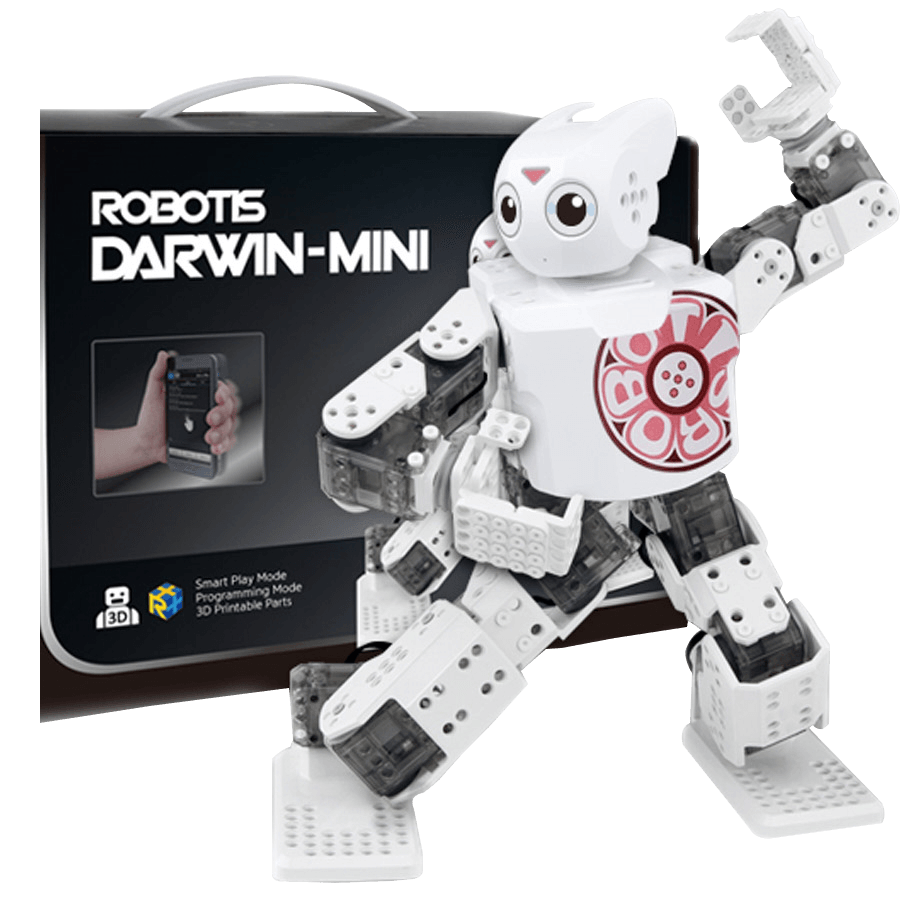
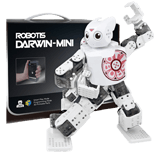
The Robotis Darwin Mini (also sold as the ROBOTIS MINI) is a desktop-sized programmable humanoid robot built for hands-on robotics, coding, and STEM education. Standing roughly 270mm tall and weighing under a pound, it walks, balances, performs headstands and rolls, and recovers itself from the ground using 16 Dynamixel XL-320 smart servos (16 degrees of freedom) driven by the OpenCM9.04-C controller, an Arduino-like board with a 32-bit ARM Cortex-M3 processor. RobotLAB supplies the Darwin Mini to schools, makerspaces, and individual learners across the U.S. as an affordable on-ramp to real humanoid robotics.
Students program the Darwin Mini with Robotis's R+ drag-and-drop software suite (R+ Task, R+ Motion, R+ Design) and can graduate to C-based coding through the OpenCM IDE. A free companion smartphone app adds touch, gesture, and voice-recognition control over Bluetooth, so beginners can drive the robot before they write a line of code. The frame is fully 3D-printable, letting classes redesign and reprint parts to customize the robot's look and mechanics, which makes it a natural fit for design-and-engineering as well as programming coursework.
As a reseller and integrator, RobotLAB positions the Darwin Mini as an entry-tier humanoid for grades 7-12 and hobbyists, priced well below the research-grade Darwin OP2 and OP3 humanoids it shares a product family with. Note that Robotis has marked the Darwin Mini as end-of-life at the manufacturer level; buyers and program planners should call RobotLAB to confirm current stock, lead times, and spare-parts availability before standardizing a curriculum on it.
How it works
Darwin Mini Humanoid Robot in detail
Middle and High School STEM / Coding Classrooms
The Darwin Mini is built for grades 7-12. Students start with drag-and-drop programming in R+ Task and R+ Motion, then progress to C in the OpenCM IDE, learning sequencing, loops, and motion choreography on a robot that visibly walks and reacts. At $499 per unit it is affordable enough to deploy at a 1:1 or 2:1 student-to-robot ratio for a class set.
Makerspaces, Libraries, and Design Courses
Because the entire frame is 3D-printable, the Darwin Mini doubles as a design-and-fabrication project: learners redesign, reprint, and reassemble parts, tying CAD and 3D printing to working robotics. This makes it a strong fit for library makerspaces, summer camps, and engineering-design electives where customization is part of the lesson.
Hobbyist and Entry-Level Humanoid Robotics
For individuals and clubs exploring humanoid motion, gaits, and balance, the Darwin Mini delivers 16 servo-driven degrees of freedom with smartphone, gesture, and voice control out of the box. It serves as a low-cost stepping stone before investing in research-grade platforms like the Darwin OP2 or OP3.
Compare
How the Darwin Mini Humanoid Robot compares
Gallery
See the Darwin Mini Humanoid Robot
Talk to a specialist
Get pricing & a free demo of the Darwin Mini Humanoid Robot.
Same-day response. We handle delivery, on-site setup, staff training, and ongoing service nationwide.
Questions & answers
About the Darwin Mini Humanoid Robot.
-
What is the Robotis Darwin Mini and who is it for?
It is a desktop-sized programmable humanoid robot kit (also called the ROBOTIS MINI) with 16 degrees of freedom, designed for STEM, coding, and robotics education in grades 7-12, as well as makerspaces and hobbyists. It walks, balances, and can be programmed with drag-and-drop software or C. For curriculum guidance, call 1-87-RobotLAB.
-
How is the Darwin Mini programmed?
Beginners use Robotis's R+ drag-and-drop suite (R+ Task, R+ Motion, R+ Design) on Windows, macOS, iOS, or Android. Advanced users can write C through the OpenCM IDE on the OpenCM9.04-C controller. A companion smartphone app also offers touch, gesture, and voice control over Bluetooth.
-
How big is it and how many servos does it have?
The Darwin Mini stands about 270 mm (roughly 10.6 inches) tall and weighs around 660 grams. It uses 16 Dynamixel XL-320 smart servos for 16 degrees of freedom, giving it walking, balancing, and recovery motions.
-
Can students customize or 3D print parts?
Yes. The Darwin Mini's frame is fully 3D-printable, so classes and makers can redesign, reprint, and reassemble parts to change the robot's appearance and mechanics. This makes it a strong fit for combined CAD, 3D-printing, and robotics projects.
-
How does the Darwin Mini compare to the Darwin OP2 and OP3?
The Darwin Mini is the entry-tier humanoid in the Robotis Darwin family: 16 DOF, no onboard computer or camera, priced at $499. The Darwin OP2 ($9,600) and OP3 ($11,000) are larger research-grade humanoids with 20 DOF, onboard PCs, and cameras for AI and university research. Call 1-87-RobotLAB to choose the right tier.
-
Is the Darwin Mini still available to buy?
Robotis has marked the Darwin Mini as end-of-life at the manufacturer level, so stock, lead times, and spare-parts availability can vary. Before building a curriculum around it, call 1-87-RobotLAB to confirm current availability and alternatives.
-
Does RobotLAB offer support, training, or volume pricing?
Yes. As a nationwide robotics integrator, RobotLAB can advise on classroom deployment ratios, curriculum, training, and quantity pricing for school and makerspace programs. Contact 1-87-RobotLAB for a tailored quote and rollout plan.
Related robots
More ai labs robots
SoftBank Research
Softbank Pepper Robot
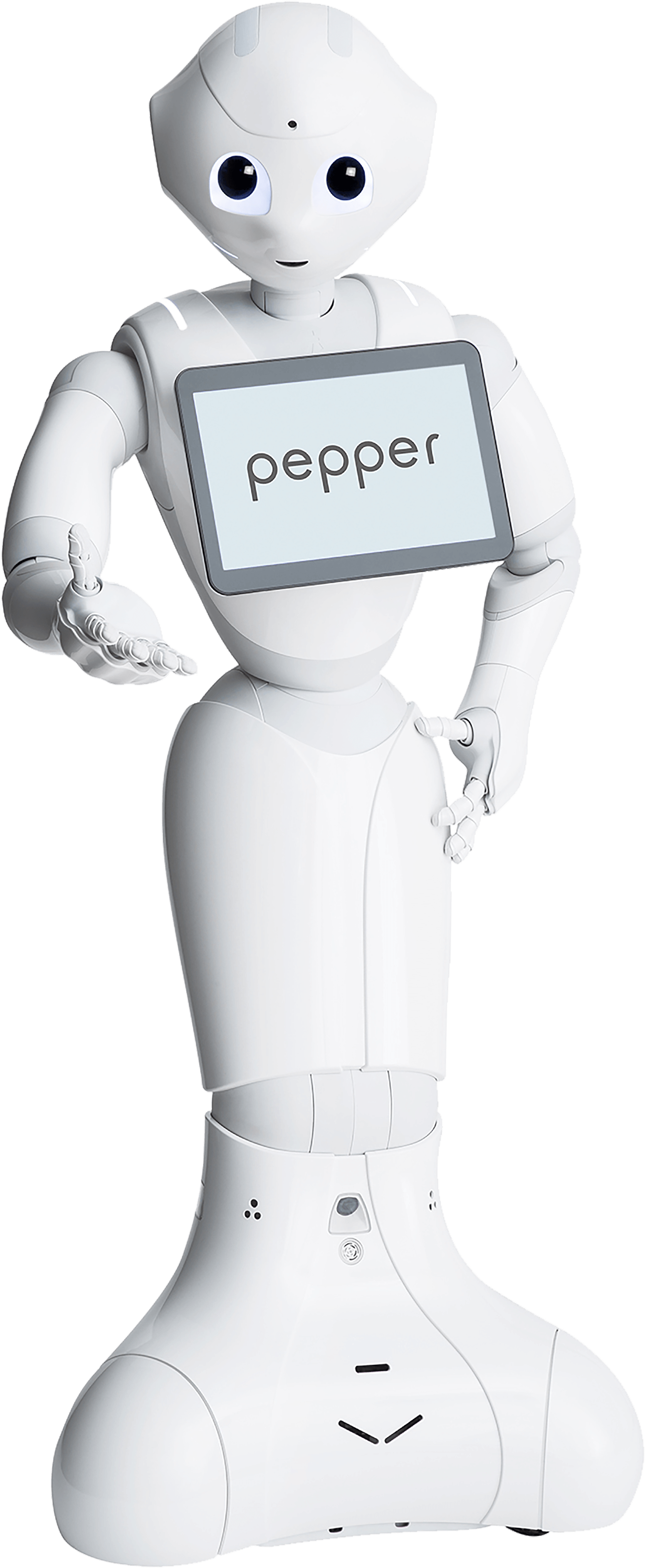
A social humanoid robot that greets, guides, and interacts with people through speech and touch — used in education, hospitality, and assisted living, and supported nationwide by RobotLAB.
From $32,000 purchase
RobotLAB Robot
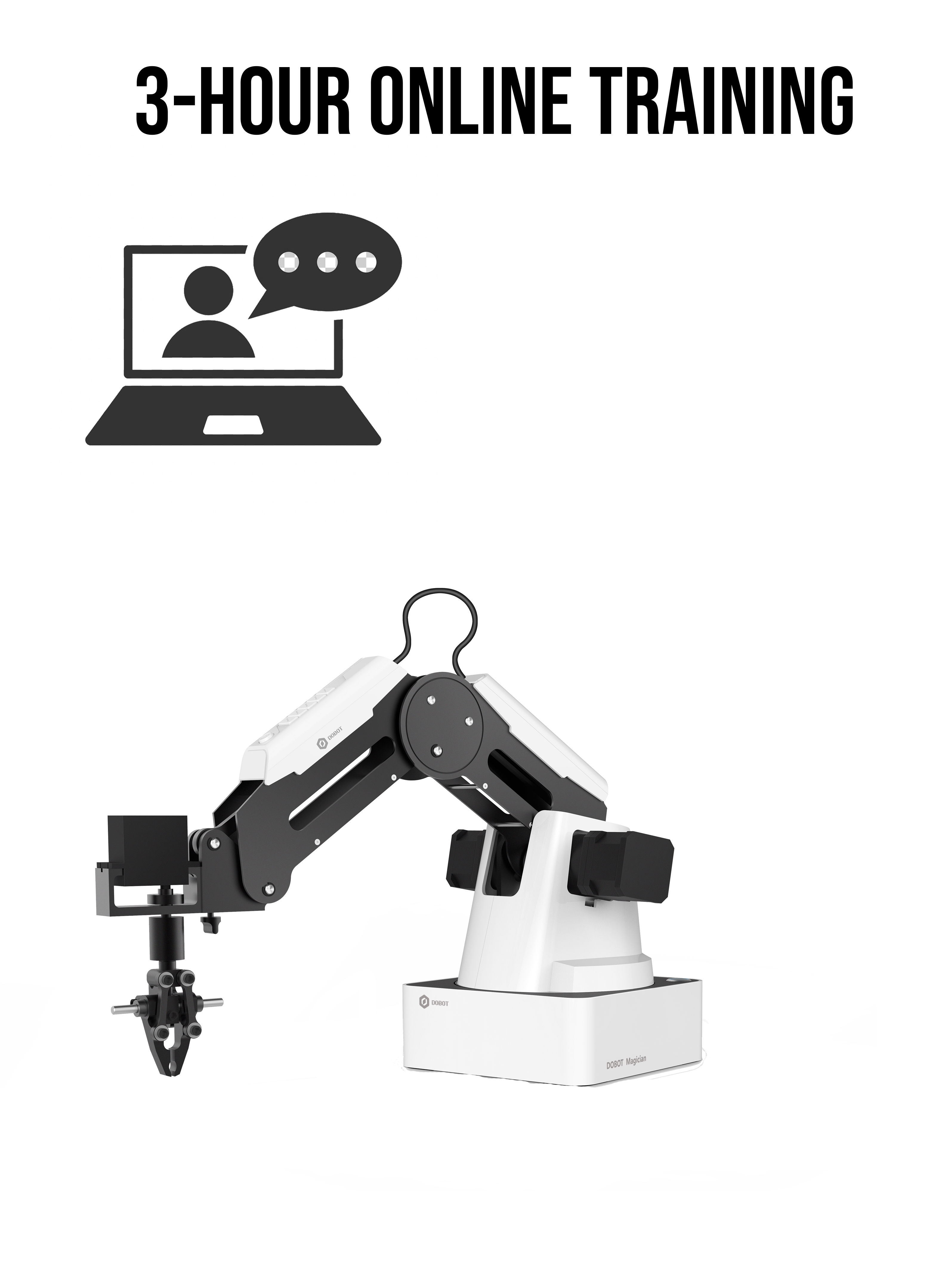
Online Training Class for Educational Robotic Arm
Multi-functional smart robotic arm platform designed for high end STEAM education and makers.
Contact Us
RobotLAB Delivery
Commercial Robots & Robotics Solutions
Too much to read? Don't have time? Choose your favorite AI, and it will summarize the content for you:
Contact Us