University robotics and AI research
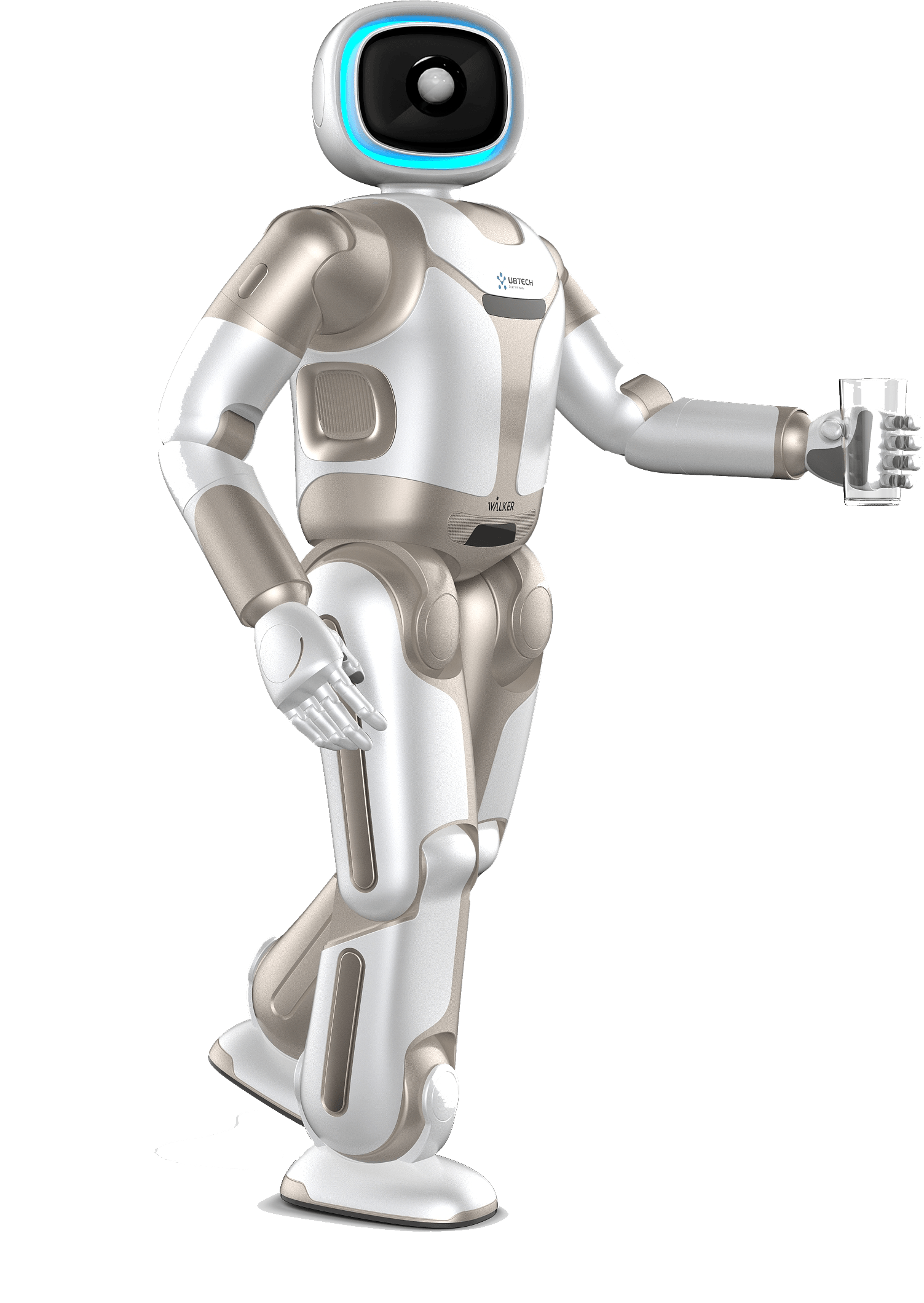
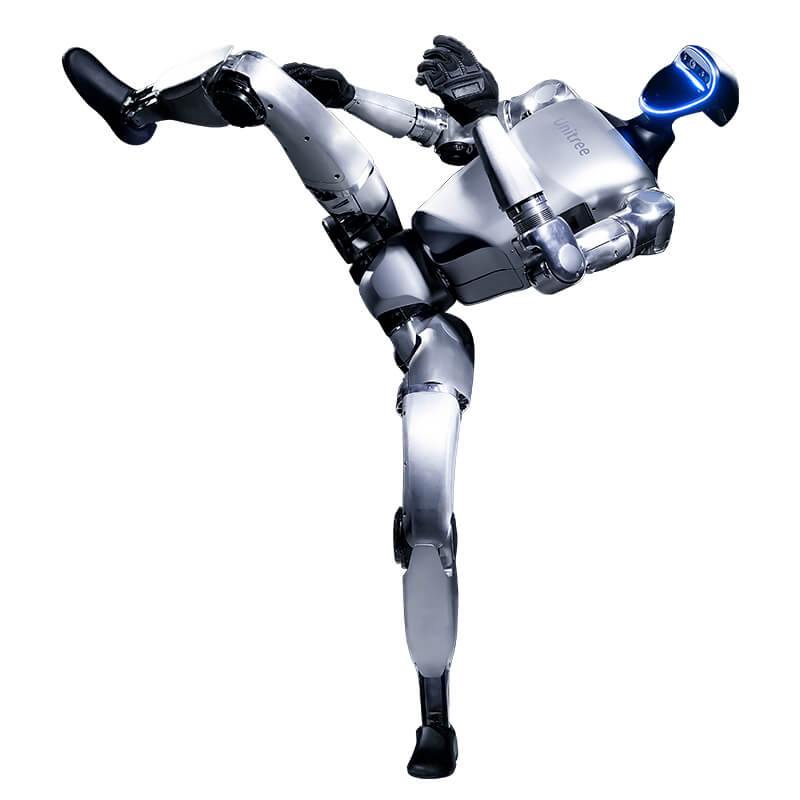
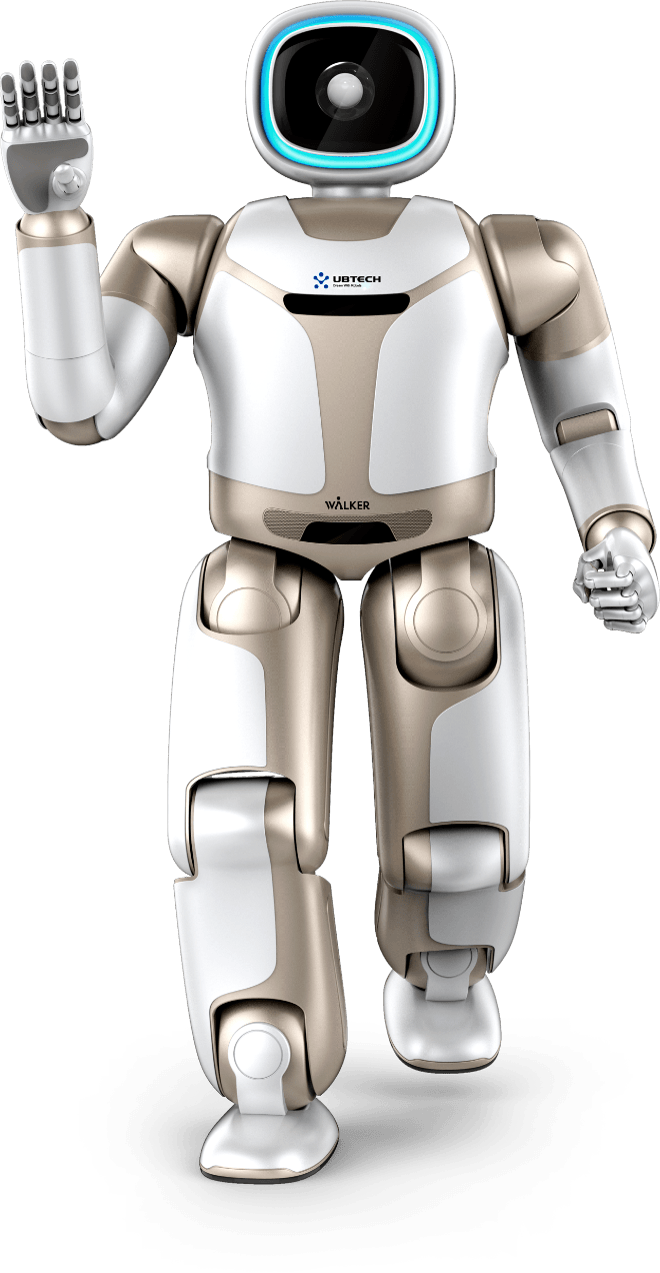
Walker gives robotics and AI labs a human-scale bipedal platform for studying whole-body locomotion, balance control, and embodied intelligence. With a full SDK and open APIs, graduate teams can run experiments in motion imitation, reinforcement learning, and AI strategy on a real two-legged body rather than in simulation alone.
Manipulation and dexterity research
The dual-arm, hand-eye-coordinated design supports research into object grasping, dual-arm collaboration, and tele-operation. Labs investigating manipulation, grasp planning, and human-to-robot skill transfer can use Walker as a standardized, programmable test bed.
Human-robot interaction studies
Walker's multimodal interaction, on-board vision, and expressive humanoid form factor make it a platform for HRI research, including semantic comprehension, social interaction, and how people respond to a full-size humanoid in shared spaces such as campus labs and reception settings.
Bipedal navigation and locomotion
Vision-based navigation, U-SLAM-style mapping, and a self-balancing algorithm let researchers study complex-terrain navigation, gait, and obstacle avoidance on a true bipedal system, supporting work in mobility, perception, and autonomous behavior.
.png)