
Exploring Commercial-Grade Robotic Vacuum Cleaners for Hotel Environments
Nov 13, 2025
Why hotel cleanliness is evolving
When guests walk into a hotel lobby, the first thing they notice is the cleanliness of the space. Sparkling floors and spotless carpets aren’t just cosmetic; they signal that the property values hygiene and attention to detail. In today’s hospitality industry, however, keeping up with this standard is becoming more challenging. Labor shortages and rising wages make it difficult to schedule enough staff for continuous cleaning, and manual vacuuming is both time‑consuming and disruptive. The result is a growing interest in commercial‑grade robotic vacuum cleaners that can maintain immaculate surfaces without interrupting the guest experience. This article explores why these robots are gaining traction and highlights one of the leading solutions on the market.
Industry challenges: The demands of hotel cleaning
Hotels operate around the clock, and guest traffic is unpredictable. Traditional cleaning schedules often fall short because carpets and hard floors accumulate dust and debris throughout the day. Housekeepers are expected to handle a wide range of tasks in addition to vacuuming, and many properties struggle with staff turnover or limited availability. The greatest advantage of automation is that these machines can take over routine tasks like vacuuming and disinfecting, freeing human employees to focus on higher‑value activities. Cleaning robots are programmable, can operate at any time, and can follow specific routes through a floor plan. These traits are essential for hotels because cleaning needs to happen quietly during off‑peak hours without disturbing guests.
Another challenge is maintaining consistent hygiene in large areas. The “Top 5 Advantages of Using a Robotic Vacuum Cleaner” article notes that robotic vacuums provide a much cleaner environment and can significantly reduce the likelihood of dust and allergen exposure. For guests with respiratory sensitivities or allergies, a spotless floor can mean the difference between an excellent stay and an uncomfortable experience. Robotic vacuums also adjust automatically to different floor types, handling both hardwood and carpeted surfaces. Advanced sensors and mapping capabilities ensure that the robots detect boundaries and avoid obstacles, preventing damage to furniture and eliminating the risk of falling down stairs. Compared with traditional equipment, these robots operate at significantly lower noise levels, which is crucial when cleaning needs to occur while guests are sleeping or relaxing.
Robotic solutions: What commercial vacuum robots can do
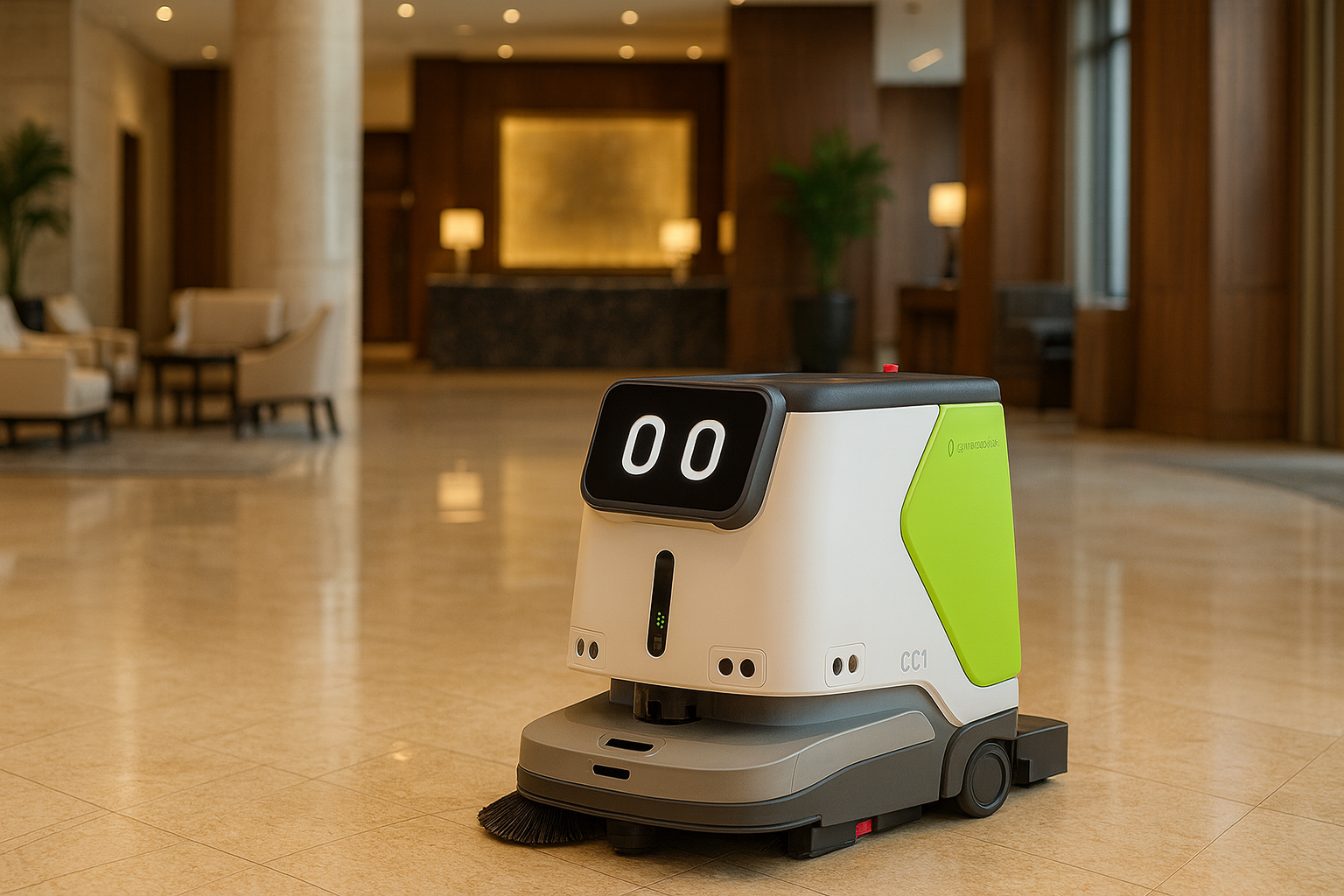
Commercial robotic vacuum cleaners differ from consumer models in both scale and sophistication. They are designed to clean larger areas, handle continuous use, and provide proof of performance so that managers know exactly when and where cleaning has occurred. RobotLAB’s examination of cleaning robots emphasizes that automation allows businesses to keep up with frequent cleaning intervals and maintain healthier environments. In the hospitality context, this means lobbies, hallways, banquet rooms and conference areas can be cleaned multiple times a day without requiring extra staff.
Here are some capabilities that make commercial robots ideal for hotels:
- Time savings and labor efficiency. Robotic vacuums can handle almost all of the work of cleaning once they are set up, giving staff more time to focus on other tasks. Hotels can schedule robots to clean during off‑peak hours, such as late at night or early in the morning, ensuring floors are fresh for guests.
- Healthier spaces. Robots provide high‑quality, thorough cleaning that removes dust, allergens and debris more effectively than manual vacuuming. This leads to a healthier indoor environment, which is increasingly important for guest satisfaction.
- Smart navigation and obstacle avoidance. Advanced sensors help robots detect edges, stairs and obstacles. Some models use LiDAR and 3D cameras to map their surroundings, ensuring efficient coverage and preventing collisions.
- Quiet operation. Unlike loud commercial vacuums, robotic cleaners are designed to operate quietly. This enables cleaning to take place without disturbing guests or interrupting meetings and events.
- Adaptability. Robots can automatically sense changes in floor surfaces and adjust cleaning modes accordingly. They’re suitable for carpets, hardwood, tile and other hotel flooring materials.
Key takeaways for hotel operators
Commercial‑grade robotic vacuum cleaners are no longer a futuristic novelty; they are practical tools that address real challenges in hospitality. By automating repetitive vacuuming tasks, hotels can free their staff to focus on guest services and other cleaning duties, improve consistency across rooms and common areas and achieve a higher standard of hygiene. Robots like Whiz combine AI‑driven route planning, extended battery life, obstacle avoidance and real‑time performance verification to deliver reliable cleaning at scale. Because these robots operate quietly and adapt to different flooring materials, they can run throughout the day or night without impacting guest experiences.
Adopting robotic vacuums demonstrates a commitment to innovation and quality that resonates with modern travelers. As guests become increasingly aware of cleanliness standards, investing in advanced cleaning technology can set a hotel apart from its competitors. For managers and owners, the combination of improved efficiency, lower labor costs and measurable cleaning results makes commercial robotic vacuums an intelligent strategic choice. Whether you operate a boutique hotel or a large resort, exploring solutions like Whiz can help you meet evolving expectations and deliver spotless experiences every time guests walk through your doors.






 Too much to read? Don't have time?

.webp?width=124&height=124&name=image%20(1).webp)
.webp?width=169&height=87&name=image%20(2).webp)