
How Robots Change Airport Operations | RobotLAB at AIRPORTECH 2026
Feb 4, 2026

The Conversation Has Evolved: Robots Reshaping Airport Operations
As the industry gathers for AIRPORTECH 2026 in Miami, the central narrative has shifted. The question is no longer if robotics will solve daily bottlenecks in terminal operations, but how to implement these solutions effectively to maintain—and elevate—service standards.
The modern airport terminal faces a critical challenge that is reshaping global mobility: a persistent labor crisis that threatens operational continuity. As passenger volumes surge, airports are discovering that traditional staffing models can no longer keep pace with demand. Solving this requires a fundamental rethink of terminal workflows.
Elad Inbar, CEO and leading robotics integrator, is bringing RobotLAB’s scalable, ready-to-deploy framework to AIRPORTECH 2026. Speaking on the deployment of practical automation solutions, Inbar positions RobotLAB as the essential partner for transitioning AI and robotics from mere concepts to real-world applications within complex operational environments.
The Real Scope of Airport Robotics
While commercial cleaning robots are driving this evolution as a crucial application, today's airport automation extends far beyond sanitation. RobotLAB helps airports deploy robotics across multiple operational areas, creating a comprehensive approach to labor relief.
The current deployment landscape includes:
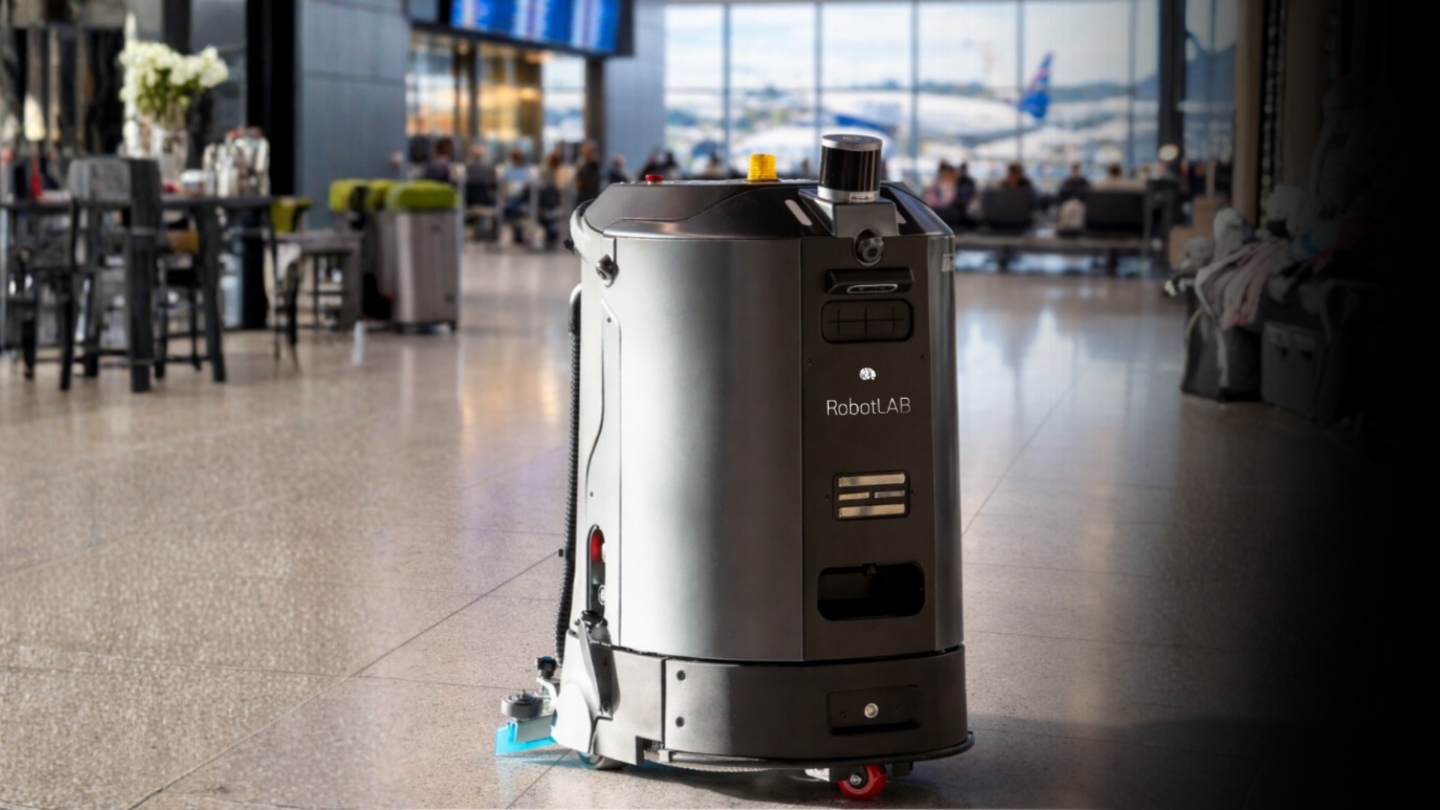
• Sanitation and Disinfection: Autonomous cleaning robots handle high-frequency sanitization in terminals, gates, and lounges—ensuring consistent cleanliness without the unpredictability of staffing gaps.
• Food Service Automation: Robotic cooking and food preparation systems support high-volume concessions and airport dining, maintaining service quality during peak travel times.
• Security and Patrol: AI-powered security robots supplement human teams, providing consistent surveillance and rapid response capabilities.
• Delivery and Logistics: Autonomous delivery robots navigate complex terminal environments to move goods, supplies, and amenities where they're needed.
• Specialized Response: Purpose-built robots handle specific challenges, from firefighting support to hazardous material management.
"We are providing robotics AI the last mile of all of this... in airports and many businesses around the world... helping airports automate and solve all these big challenges." — Elad Inbar, CEO of RobotLAB
1. Addressing the Human Factor: Labor Shortages and Retention
The most pressing challenge for airport operations isn't technological—it's finding and keeping qualified staff. Labor shortages have shifted from a temporary disruption to a permanent operational reality. Airports struggle to maintain the staffing levels required for 24/7 operations, particularly for physically demanding, repetitive, or hazardous roles.
Robotics provides a practical solution by creating operational stability. By handling tasks that are difficult to staff consistently, from overnight cleaning shifts to continuous security patrols—robots ensure that critical functions remain operational regardless of labor market fluctuations.
This isn't about replacing workers; it's about augmenting teams and freeing staff to focus on higher-value interactions. A delivery robot handling towel runs to hotel rooms allows hospitality staff to spend more time with guests. An autonomous floor scrubber working overnight ensures clean terminals without requiring staff for graveyard shifts. A robotic food prep assistant enables kitchen teams to serve more passengers during rush periods.
The result is more stable operations, improved job satisfaction for remaining staff, and the ability to redirect human talent toward tasks that genuinely benefit from human judgment and interaction.
2. Delivering Consistent Performance Around the Clock
Variable service quality creates operational headaches for airport managers. When service depends entirely on human availability and energy levels, consistency suffers. The morning shift might be fully staffed while the overnight crew runs short. One team might excel while another struggles.
Robots deliver predictable, documented performance shift after shift. An autonomous cleaning robot follows the same route with the same thoroughness at 3 AM as it does at 3 PM. A delivery robot maintains the same pace and accuracy during peak hours as it does during quiet periods. This consistency creates measurable operational benefits.
Airport managers gain the ability to plan around guaranteed service baselines. They know floors will be cleaned to specification, deliveries will be completed on schedule, and patrol routes will be covered—regardless of staffing challenges, seasonal variations, or unexpected absences.
This reliability extends beyond daily operations to long-term planning. With robots providing a stable operational foundation, airports can more accurately forecast service levels, plan capacity, and meet compliance requirements with confidence.
3. Practical Integration: Making Automation Work in Complex Environments
Deploying robots in an airport isn't as simple as buying hardware and turning it on. The real challenge lies in integrating robotic systems into existing workflows without disrupting operations. This is where RobotLAB's partner approach delivers value.
Successful airport automation requires more than equipment—it demands a clear methodology for adoption. Airport executives need to understand how to evaluate robotic solutions, identify the right applications, train staff to work alongside robots, and scale deployments across multiple locations or terminals.
RobotLAB focuses on making this integration process straightforward through comprehensive support from evaluation through implementation and ongoing operation. This includes assessing which tasks are best suited for automation, planning deployment timelines that minimize disruption, training staff on robot management and troubleshooting, and providing ongoing support as operations scale.
The goal is making robotics an invisible yet indispensable part of airport operations—technology that works seamlessly within existing systems rather than requiring wholesale operational redesign. When integration is done right, robots become natural extensions of airport teams, handling their designated tasks while human staff focus on areas where they add the most value.
Looking Ahead: AIRPORTECH 2026 and Beyond
The vision articulated by Elad Inbar and RobotLAB points toward airports as fully integrated environments where robotics support every aspect of terminal operations. As the industry convenes at AIRPORTECH 2026, the focus will be on practical implementation strategies—moving from pilot programs to full-scale deployment.
For airport operators facing labor challenges, the question is no longer whether to adopt robotics, but how to implement automation in ways that deliver measurable operational improvements. The terminals that solve their labor gaps through strategic robotics deployment will be the ones that maintain service quality, control costs, and create better experiences for both passengers and staff.
As these technologies become standard parts of airport infrastructure, operations become more predictable, service more consistent, and terminals better equipped to handle the demands of modern air travel. That's the future RobotLAB is helping airports build—one where smart, useful robots enable the seamless operations that travelers expect and deserve.
Ready to explore how robotics can address your airport's operational challenges? Contact RobotLAB to discuss practical automation solutions tailored to your terminal's specific needs.







 Too much to read? Don't have time?

.webp?width=124&height=124&name=image%20(1).webp)
.webp?width=169&height=87&name=image%20(2).webp)