

Robots That Pay for Themselves: A New Playbook for Business Leaders
Feb 2, 2026

Elad Inbar RobotLAB CEO’s Essential Guide to Practical Robotics and Automation ROI
Why This Book, Why Now
Every business leader faces the same pressure: permanent labor shortages, rising operational costs, and relentless demands to deliver more with less. Traditional solutions—hiring more staff, increasing wages, extending hours—no longer work when the workers simply aren't available.
Meanwhile, robotics coverage oscillates between Hollywood spectacle and venture capital hype. Humanoid demonstrations go viral. Tech conferences showcase experimental prototypes. Industry publications breathlessly predict the automated future.
But what operators actually need isn't another promise about tomorrow. They need robots that work today. Robots that integrate into existing workflows. Robots that generate measurable ROI within months, not years. Robots that pay for themselves.
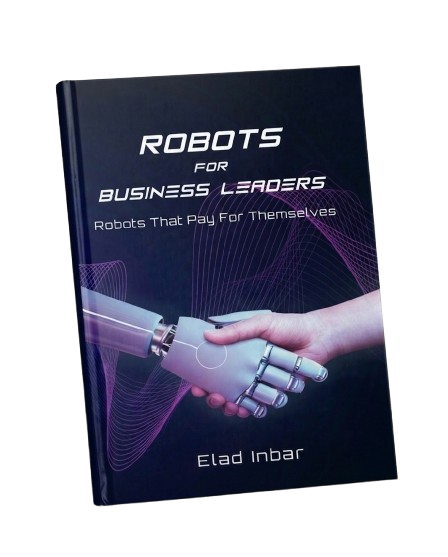
That's exactly what "Robots for Business Leaders: Robots That Pay for Themselves" delivers.
Written by Elad Inbar, CEO of RobotLAB and a nearly two-decade veteran of commercial robotics deployment, this book is a practical field guide to using physical AI and automation to create cleaner, faster, safer, and more profitable operations—workflow by workflow, industry by industry.
Get Your Copy
From Vision to Execution
Elad's previous book, "Our Robotics Future" introduced readers to the transformative potential of robotics and automation. It painted the big picture: where the technology was heading, why it mattered, and what it meant for business and society.
The new book answers a different, more urgent question: What do robots do—and how do I deploy them successfully in my business?
"Robots for Business Leaders" takes the conversation from curiosity and concepts to concrete outcomes and deployment. It's the shift from understanding robotics in theory to implementing automation in practice. For executives, operators, and business owners ready to move beyond exploration and into execution, this is the playbook.
Who Is This Book For?
This book speaks directly to three critical audiences:
1. Business Owners and Founders
You built your business through smart decisions and calculated risks. Now you're watching labor costs consume profitability, service quality fluctuate with staffing availability, and competitors explore automation while you evaluate options.
2. Operators and General Managers
You carry responsibility for day-to-day performance. You see the staffing gaps, manage the overtime budgets, field the customer complaints, and absorb the pressure when operations break down.
3. Executives and Decision Makers
You evaluate capital investments, approve strategic initiatives, and balance short-term financial performance with long-term competitive positioning.
What's Inside?
Get the Foundation Right
Before deploying any robot, you need the right mental model and analytical framework. Part 1 establishes both:
- • Think about robots as workflows, not gadgets – Learn how to identify which workflows are ripe for automation.
- • Calculate ROI correctly – Discover how to quantify direct labor savings, safety benefits, and revenue opportunities.
- • Launch robotics intelligently – Running effective pilots and getting IT, security, and finance teams on board.
- •Avoid common failure modes – Learn from the documented mistakes that cause robotics initiatives to stall.
Industry Playbooks You Can Act On
Part 2 is organized by industry, allowing you to walk away with an actionable plan. Industries covered include:
- • Hospitality
- • Restaurants and Foodservice
- • Healthcare
- • Education
- • Retail
- • Logistics and Warehousing
- • Large Venues (Stadiums, Airports)
Scaling and the Future of Work
Successfully deploying one robot is valuable. Building a scalable automation strategy is transformative. Part 3 shows you how to move from pilot projects to enterprise-wide competitive advantage and managing the workforce transition.
What 'Robots That Pay for Themselves' Really Means
The title isn't marketing rhetoric—it's a precise operational statement. When robotics implementations succeed, they generate measurable financial returns:
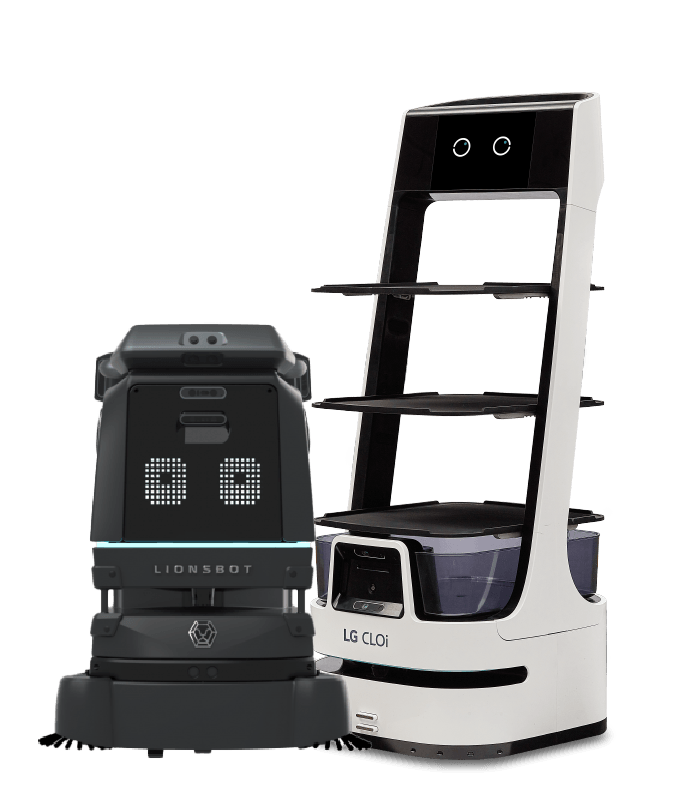
- • Hotel Example: Autonomous floor scrubbers can lead to a payback period of 1-3 months, saving upwards of $7,440 annually per robot.
- • Restaurant Example: Delivery robots can increase revenue per server by 15% by accelerating table turnover during peak periods.
- • Warehouse Example: AMRs often result in a 30% reduction in picking time and significant decreases in workplace injuries.
Get Your Copy and Start Planning
The future of work is already here. The businesses that thrive will be those whose leaders understand how to deploy automation intelligently.
Available on:Connect with RobotLAB
Ready to explore deployment? Contact RobotLAB to schedule a consultation or request an ROI assessment.
This is the playbook for leaders who want robots that don't just impress—but pay for themselves.







 Too much to read? Don't have time?

.webp?width=124&height=124&name=image%20(1).webp)
.webp?width=169&height=87&name=image%20(2).webp)