Peel 3.CAD – 3D Scanner
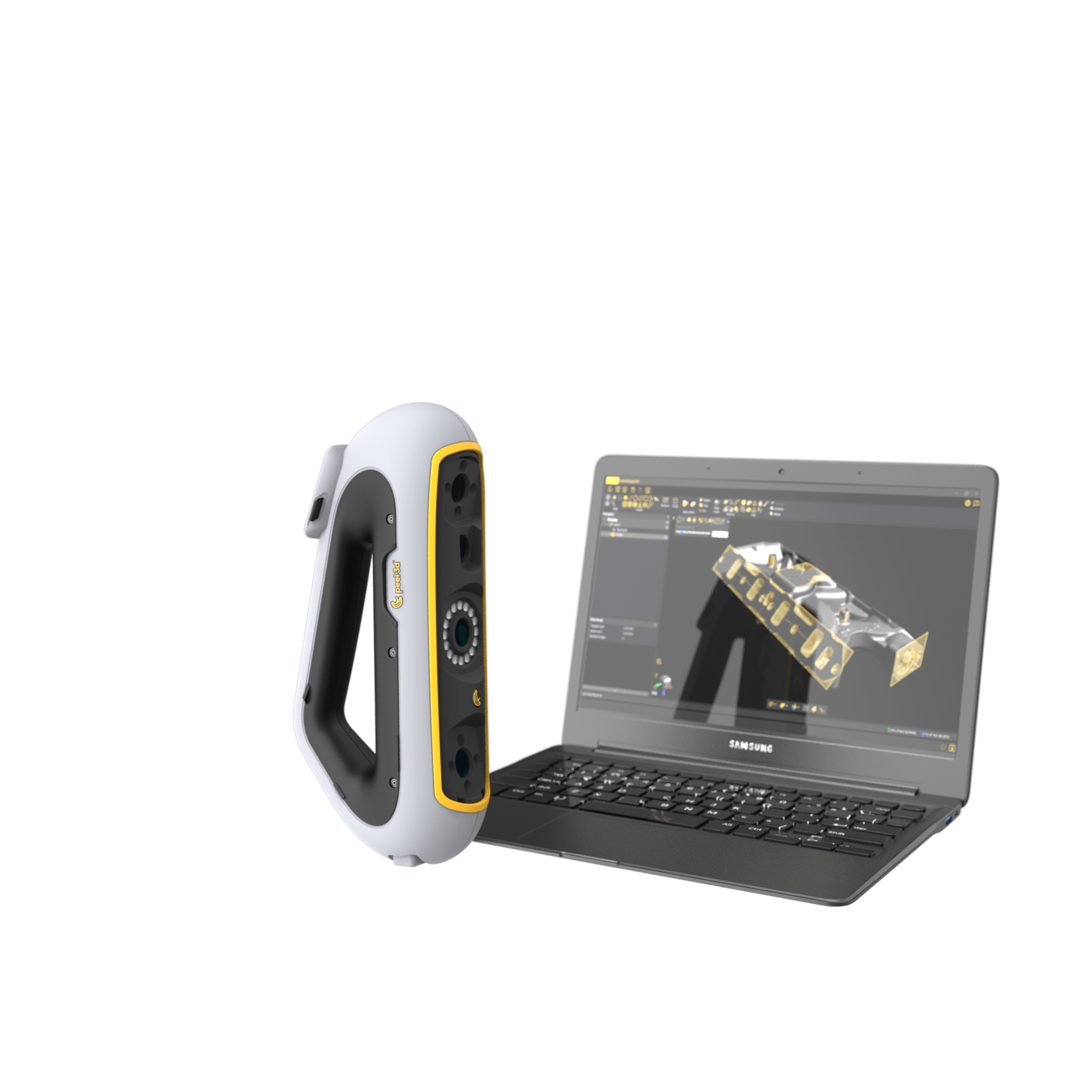
The Peel 3 scanner bundled with peel.CAD β your seamless bridge from 3D scan data to CAD software. Built for reverse engineering: scan a part, then transfer clean geometry into SOLIDWORKS, Inventor, or PTC.
How hospitality operators evaluate, deploy, and scale commercial robots.
Tell us your industry and we'll recommend 3-4 robots to shortlist.
We evaluate, certify, and service every robot we sell.
From marketing, sales, demonstrations, and proof-of-concepts through deployment, training, support β and even repair. Local teams, local inventory, same-day service.
The first and only commercial robotics & AI franchise in America.
Sent by email within hours. 14-day review period. No obligation.
By Elad Inbar, RobotLAB founder & CEO β a practical guide to adopting robotics that actually delivers ROI.
About the book βFree, 30 minutes, same-day reply.
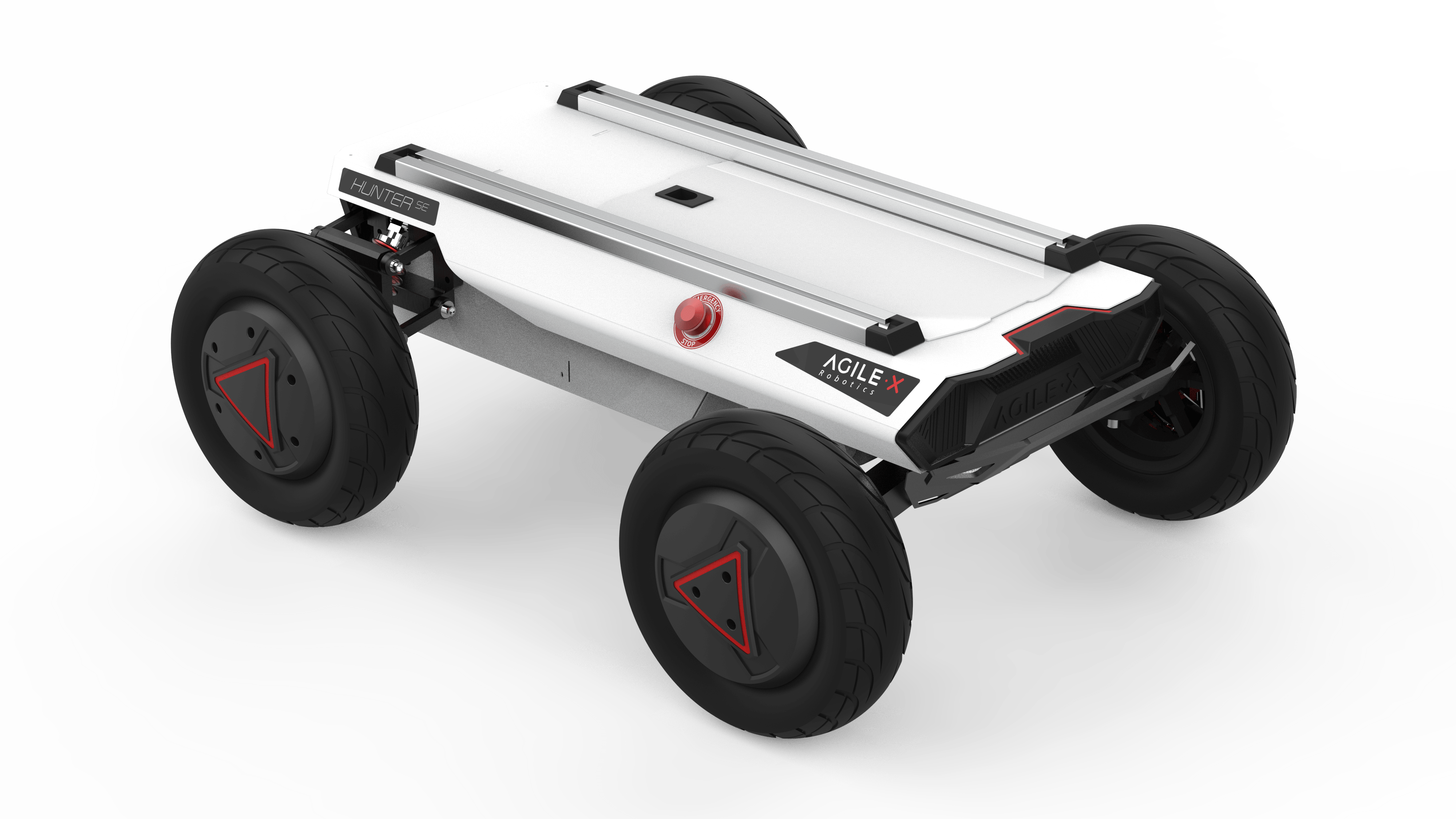
The AgileX Hunter SE is a compact, drive-by-wire unmanned ground vehicle (UGV) chassis built around front-wheel Ackermann steering, the same geometry used in passenger cars. That steering model sets it apart from the skid-steer rovers that dominate the research-robot category, making it the platform of choice when a lab needs to study autonomous driving behavior, path planning, and high-speed navigation that mirror how a real vehicle moves. At 820 x 640 x 310 mm and 42 kg, it is small enough to run indoors or on a closed test course, yet it carries up to 50 kg of sensors and compute and tops out at 4.8 m/s.
RobotLAB sells, leases, and supports the Hunter SE as a U.S.-based AgileX reseller and integrator. The base platform ships as a bare drive-by-wire chassis with a CAN bus interface and an open-source SDK; cameras, LiDAR, onboard compute, and autonomy stacks are added through AgileX development kits such as the Autonomous System Development Kit or an R&D Kit Pro. This keeps the entry price low for teams that already own their own sensors and want a clean, ROS-friendly mobile base to build on.
Because RobotLAB handles procurement, deployment, training, and ongoing service nationwide, university labs and corporate R&D groups can stand up a working autonomous-driving testbed without sourcing parts from overseas. The all-steel body, 24V/30Ah battery, and 2-3 hour runtime are designed for repeated, intensive test cycles, and the modular aluminum T-slot mounting rails let researchers reconfigure the sensor suite as projects evolve.
| Brand | AgileX |
| Model | Hunter SE |
| Drive / steering | Front-wheel Ackermann, drive-by-wire chassis |
| Dimensions (L x W x H) | 820 x 640 x 310 mm |
| Curb weight | 42 kg |
| Max payload | 50 kg |
| No-load max speed | 4.8 m/s |
| Max climbing grade | 30 degrees |
| Ground clearance | 120 mm |
| Battery | 24V / 30Ah |
| Runtime (operating time) | 2 to 3 hours |
| Communication | CAN interface |
| Operating temperature | -20 degrees C to 60 degrees C |
| Body | All-steel, modular with aluminum T-slot mounting rails |
| SDK / software | Open-source SDK, ROS-compatible |
| Purchase Price | $7,000 |
The Hunter SE's Ackermann steering makes it a scaled stand-in for a real automobile, so engineering and computer-science departments use it to teach and study path planning, vehicle dynamics, SLAM, and perception under car-like kinematics. Its open SDK and CAN interface integrate with ROS/ROS2 workflows, and the 50 kg payload leaves room for full sensor stacks (LiDAR, cameras, GPS) plus onboard compute.
Companies and public-sector labs developing self-driving algorithms use the Hunter SE as a low-cost, repeatable platform to validate software before committing to full-size vehicles. The 4.8 m/s top speed and 30-degree climbing grade support realistic outdoor test runs, while the drive-by-wire architecture exposes the steering and throttle controls that autonomy software needs.
The modular T-slot rails and 50 kg payload capacity let teams iterate quickly on new sensor arrays, inspection rigs, or custom enclosures. Because it accepts external kits rather than locking users into a fixed configuration, it suits manufacturing and industrial groups prototyping mobile inspection or material-handling concepts on a vehicle-style chassis.
Same-day response. We handle delivery, on-site setup, staff training, and ongoing service nationwide.
No. The base Hunter SE is a bare drive-by-wire chassis with a CAN interface and open-source SDK. Cameras, LiDAR, onboard compute, and obstacle-avoidance/autonomy stacks are added through AgileX development kits such as the Autonomous System Development Kit or R&D Kit Pro. RobotLAB can spec the right kit for your project. Call 1-87-RobotLAB to scope a configuration.
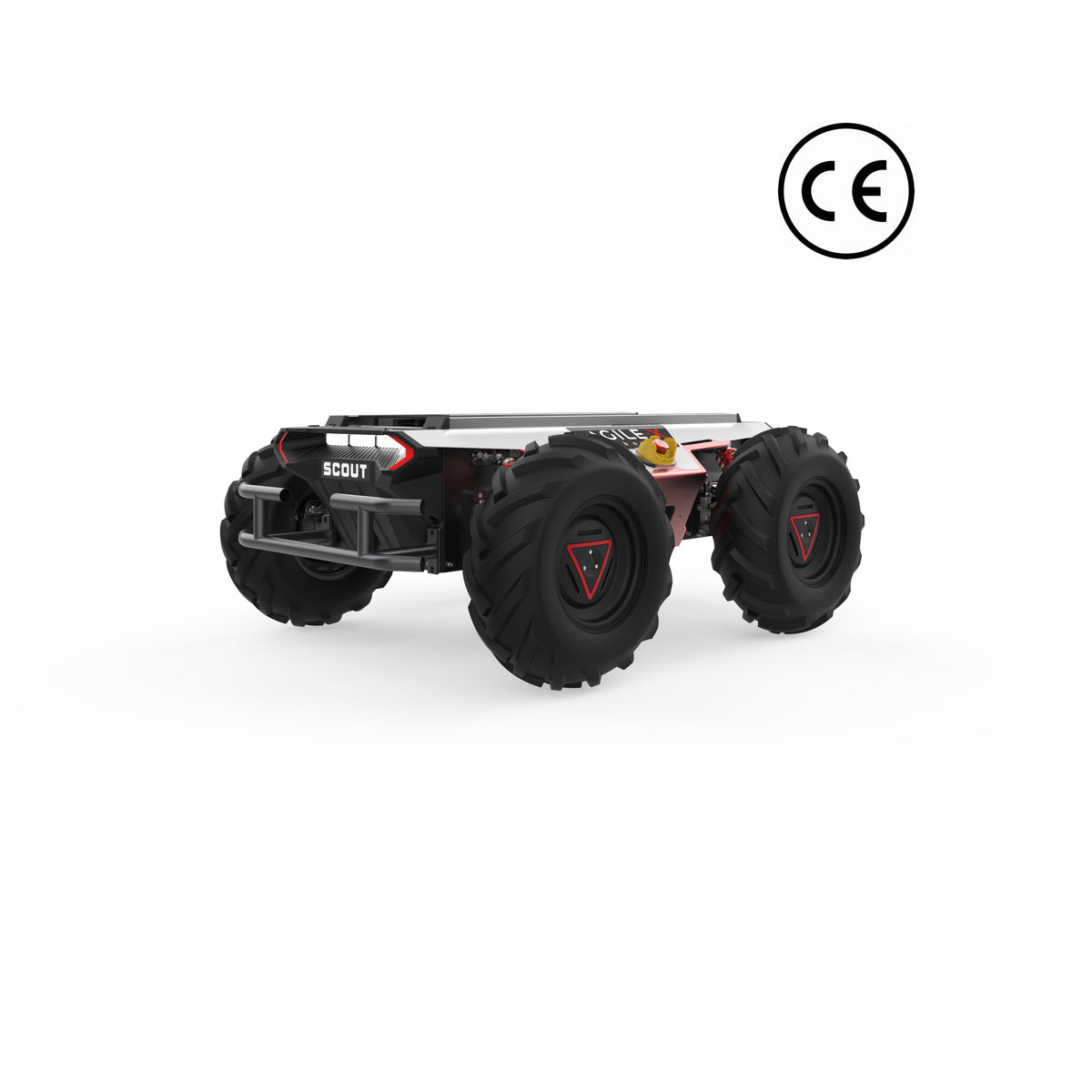
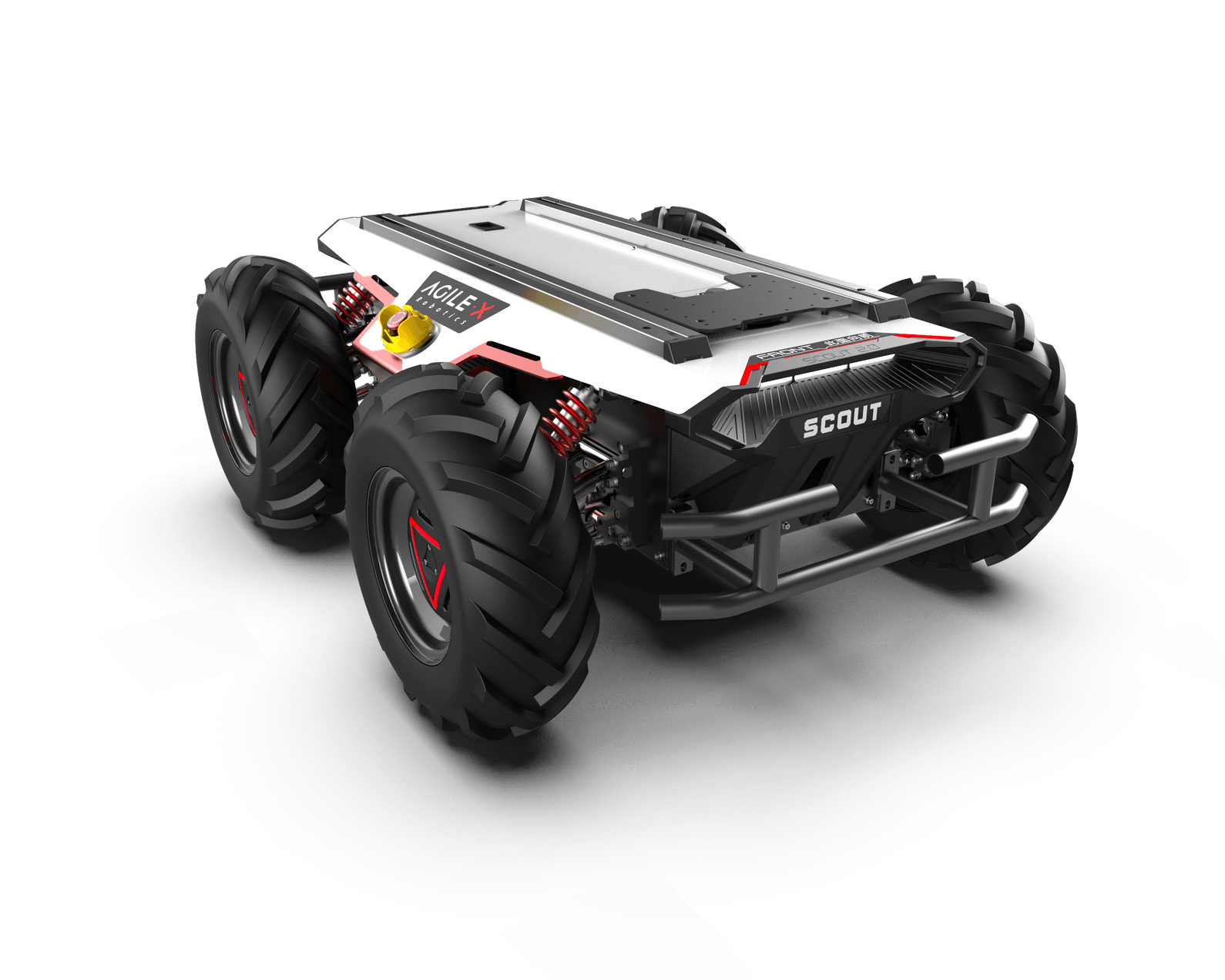
The Hunter SE uses front-wheel Ackermann steering, the same geometry as a passenger car, so it turns like a vehicle rather than rotating in place. That makes it the better fit for autonomous-driving research where car-like kinematics matter. Skid-steer platforms like the Scout 2.0 are better for tight-space maneuvering and rough-terrain traction.
Yes. It ships with an open-source SDK and CAN bus interface and is designed to work with ROS/ROS2 development workflows, which is why it is widely used in university robotics labs. RobotLAB can advise on the software stack and supported sensor integrations.
The Hunter SE runs on a 24V/30Ah battery for roughly 2 to 3 hours of operating time per charge, with a no-load top speed of 4.8 m/s. Actual runtime depends on payload, terrain, and how aggressively the platform is driven during testing.
Yes. As a U.S.-based AgileX reseller and integrator, RobotLAB sells, leases, deploys, trains, and services the Hunter SE nationwide, with a 1-year warranty. Operating the base unit requires no special training, and optional professional development/training is available. Call 1-87-RobotLAB to discuss purchase, lease, or RaaS options.
Up to 50 kg, mounted via the modular aluminum T-slot rails on top of the all-steel body. That leaves ample room for a full research sensor suite plus onboard compute. For heavier loads, the larger AgileX Hunter 2.0 carries up to 150 kg.
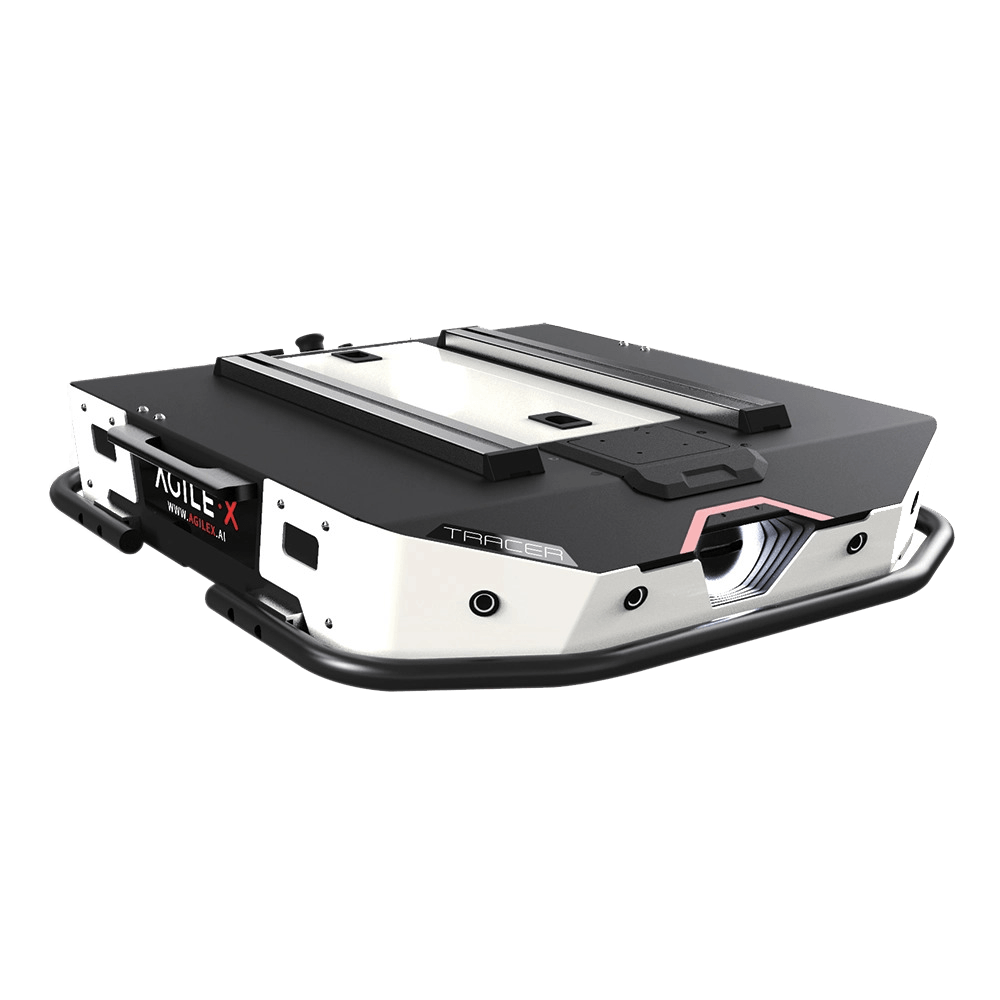
Both. Its compact 820 x 640 mm footprint suits indoor labs and test courses, while the 120 mm ground clearance, 30-degree climbing grade, and -20 to 60 degree C operating range support outdoor testing. For purely indoor, lower-speed AGV development, the AgileX Tracer is a lower-cost alternative. Call 1-87-RobotLAB for guidance.

The Peel 3 scanner bundled with peel.CAD β your seamless bridge from 3D scan data to CAD software. Built for reverse engineering: scan a part, then transfer clean geometry into SOLIDWORKS, Inventor, or PTC.

A rugged 4WD all-terrain research rover that turns ROS theory into hands-on autonomy β deployed, configured, and supported by America's largest commercial robotics integrator.

Esports is an important topic in schools today. How do we take technology and make it useful in the classroom?
Professional 305 m underwater inspection drone with a tilting Full HD camera β single-operator deployable, sold, leased, and serviced nationwide by RobotLAB.
You choose which categories of cookies are stored on your device. Strictly-necessary cookies are required for the site to function and cannot be disabled. Read more in our Privacy Policy.
Session, security, and the consent record itself. Required for the site to operate.
First-party tracking (Mautic, on t.robotlab.com) so we understand which pages and products visitors engage with and improve the site over time.
Advertising pixels (Google Ads, Meta Pixel) used to measure ad performance and show relevant ads on partner sites. Turning this off opts you out of CCPA "sale" of personal information.