.png)
Dobot Dobot
Dobot Robotic Arm – Advanced Pack
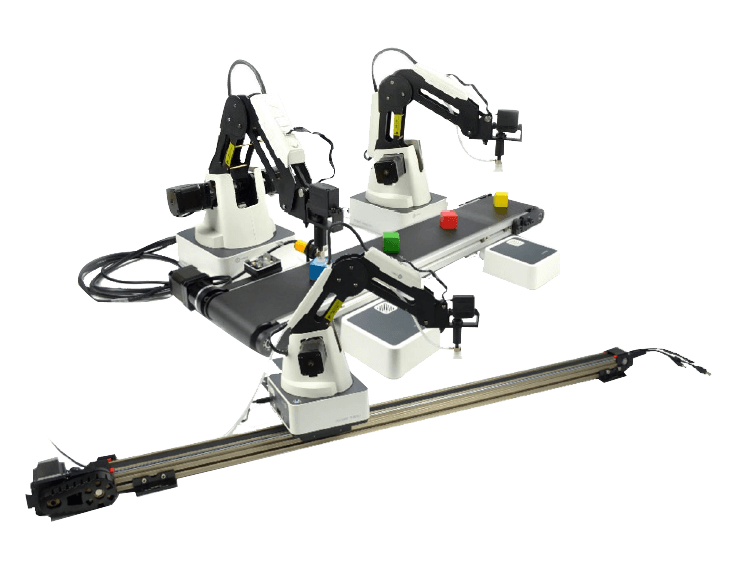
A turnkey three-station robotics lab: 3 Dobot Magician arms, 2 conveyor belts, a linear rail, and a year of K12 curriculum, ready to teach automation out of the box.
From $9,490 purchase
How hospitality operators evaluate, deploy, and scale commercial robots.
Tell us your industry and we'll recommend 3-4 robots to shortlist.
We evaluate, certify, and service every robot we sell.
From marketing, sales, demonstrations, and proof-of-concepts through deployment, training, support — and even repair. Local teams, local inventory, same-day service.
By Elad Inbar, RobotLAB founder & CEO — a practical guide to adopting robotics that actually delivers ROI.
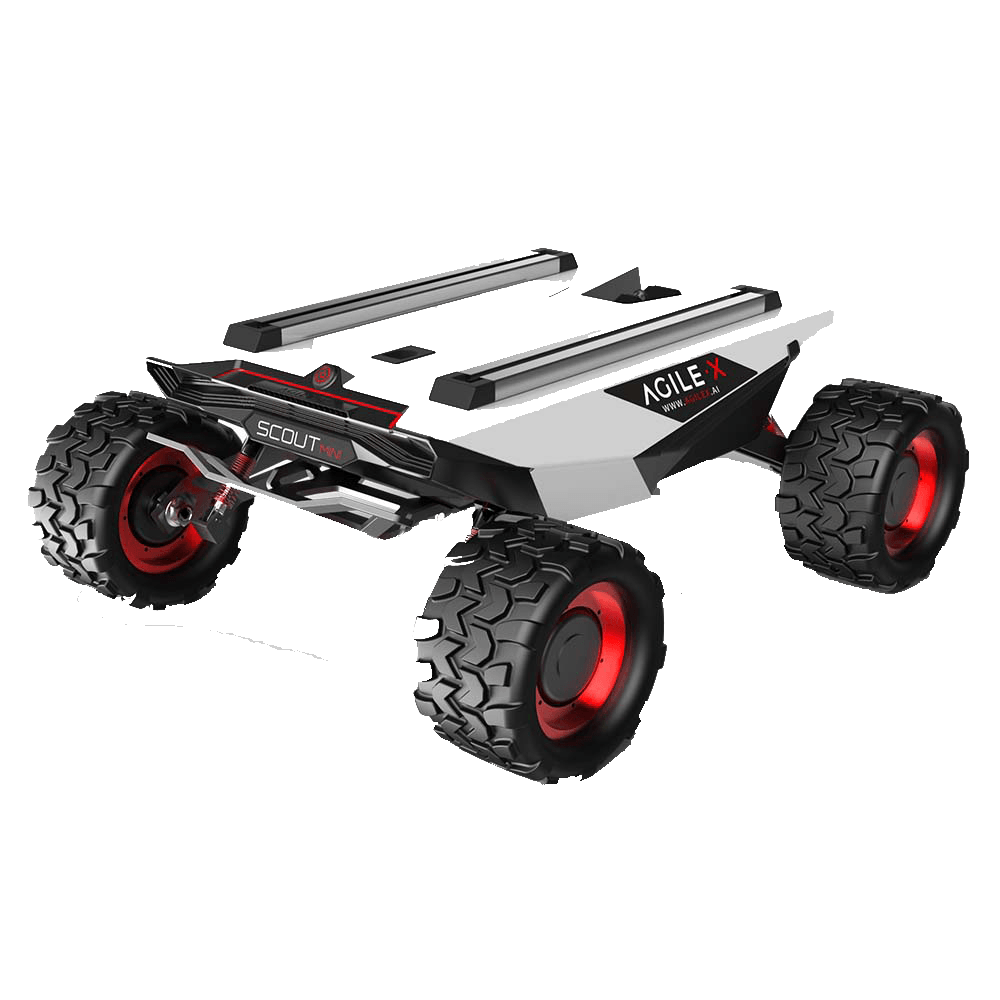
About the book →A rugged 4WD differential-drive UGV platform with a 50 kg payload, in-place turning, and open ROS/CAN integration — ideal for outdoor robotics research and autonomy development. Sold, deployed, and serviced nationwide by RobotLAB.
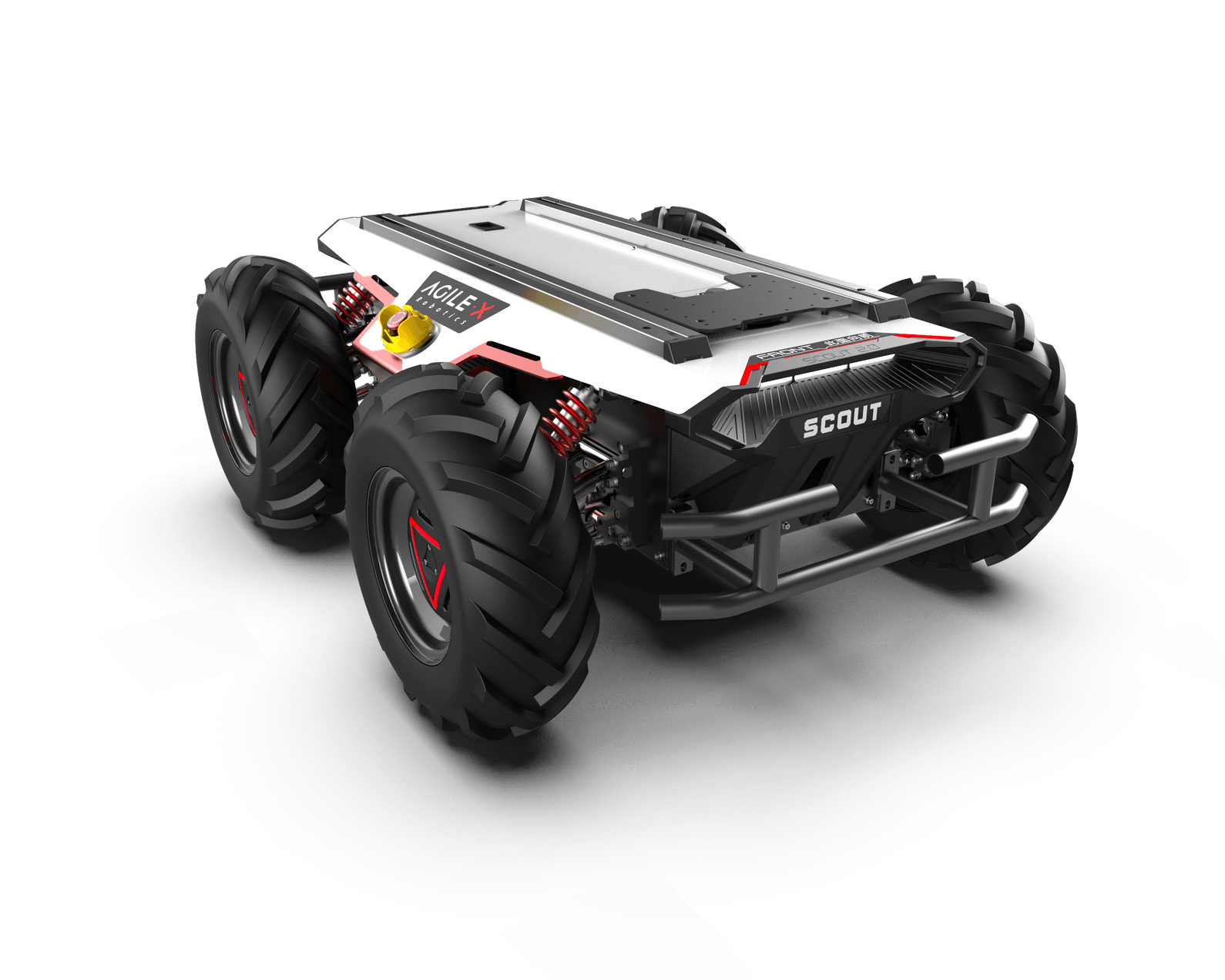
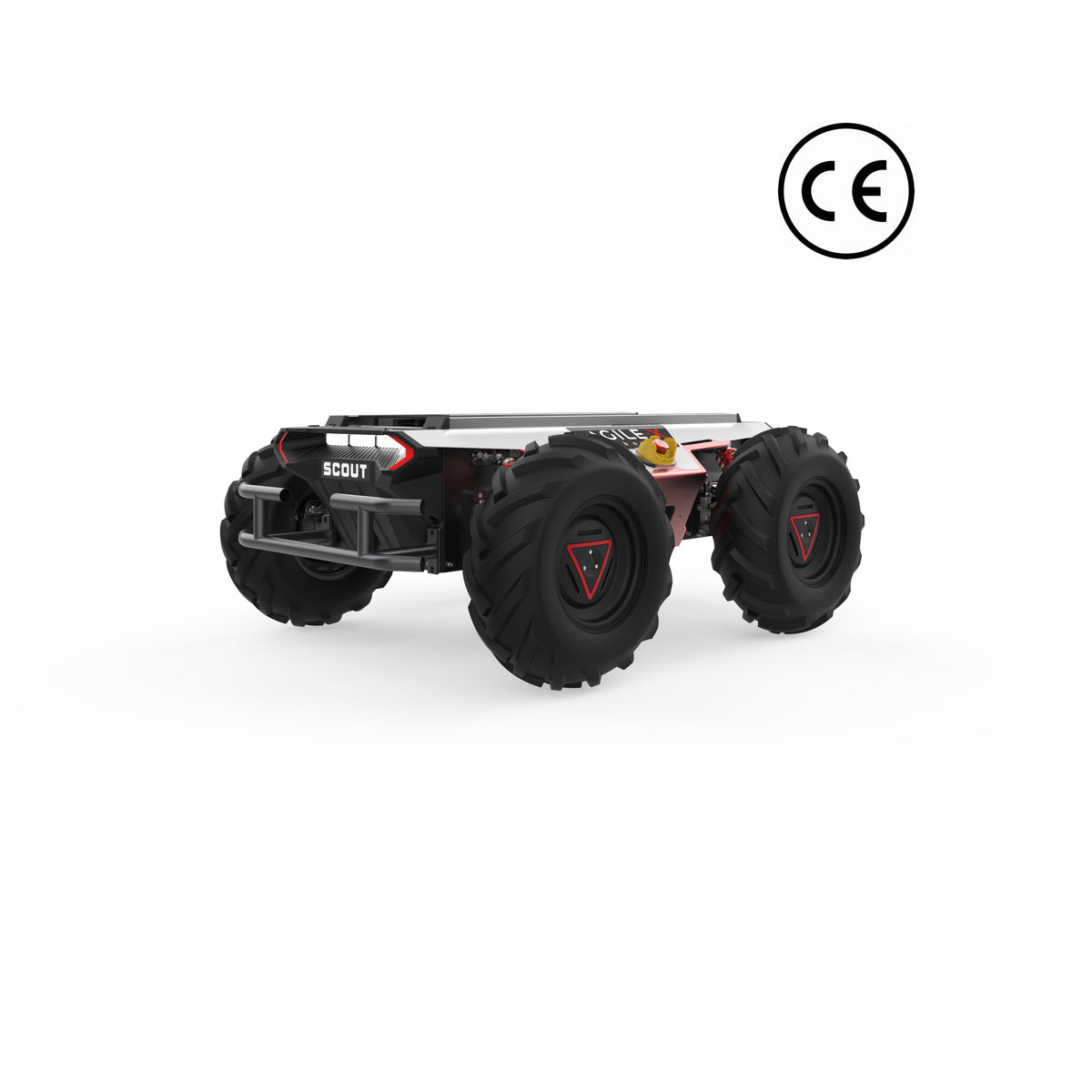
The AgileX Scout 2.0 is a four-wheel differential-drive unmanned ground vehicle (UGV) built for robotics research, autonomy development, and rugged outdoor experimentation. Each wheel is driven by its own brushless servo motor, and a double-wishbone independent suspension keeps all four wheels in contact with uneven ground, letting the platform cross obstacles and climb slopes that would stop a flat-chassis robot. With a 50 kg payload allowance, aluminum T-slot mounting rails on top, and an exposed CAN/serial control interface, the Scout 2.0 is designed to be a blank canvas that researchers load with their own LiDAR, cameras, manipulators, and compute.
Out of the box the Scout 2.0 ships with an open-source SDK and ROS/ROS 2 driver packages, so teams can command velocity, read odometry, and integrate the base into a navigation stack quickly rather than reverse-engineering a proprietary controller. Its zero-radius, in-place rotation (four-wheel differential steering) makes it maneuverable in tight indoor labs, while an IP22 baseline rating — upgradable to IP44 or IP64 — and a circulating cooling system support sustained outdoor and high-temperature operation. A standard 24V/30Ah battery (upgradable to 60Ah) delivers roughly 150 minutes of runtime per charge.
RobotLAB sells, configures, deploys, trains, and services the Scout 2.0 nationwide. As a reseller and integrator, RobotLAB can pair the base platform with sensors, compute, and curriculum, and provide ongoing support — so university labs, R&D groups, and engineering teams get a working research platform rather than just a crate of hardware.
| Purchase Price | $14,190 |
| Drive type | 4WD four-wheel differential drive (independent suspension) |
| Steering / turning | Differential steering, 0 mm minimum turning radius (in-place rotation) |
| Dimensions (L x W x H) | 930 x 699 x 349 mm |
| Wheelbase | 498 mm |
| Curb weight | 68 kg |
| Payload capacity | 50 kg |
| Max speed | 1.5 m/s (no load) |
| Motors | Four independent brushless servo motors (offered in 200W and 400W per-wheel configurations) |
| Battery | 24V / 30Ah (upgradable to 24V / 60Ah) |
| Runtime | Approx. 150 min (manufacturer figure) |
| Range | Approx. 15 km (manufacturer figure; varies by load/terrain) |
| Charging time | 3.5 h (30Ah) / 7 h (60Ah) |
| Max climbable slope | 30 degrees (no load) |
| Max obstacle crossing height | 150 mm (no load) |
| Ground clearance | 135 mm |
| IP rating | IP22 (upgradable to IP44 or IP64) |
| Operating temperature | 0 degC to 40 degC |
| Communication interface | CAN bus and serial |
| Software / SDK | Open-source SDK with ROS / ROS 2 driver packages |
| Mounting | Aluminum T-slot rails (top deck) |
| Certification | CE certified |
The Scout 2.0 is widely used as a teaching and research base for SLAM, autonomous navigation, multi-robot coordination, and sensor-fusion projects. Its open ROS/ROS 2 drivers, CAN/serial interface, and 50 kg payload give graduate students and faculty room to bolt on LiDAR, depth cameras, GPS/RTK, and onboard computers without modifying the drivetrain, making it a practical platform for higher-education robotics and autonomy coursework.
With independent double-wishbone suspension, four-wheel drive, a 30-degree slope rating, and the ability to cross obstacles up to roughly 150 mm (unloaded), the Scout 2.0 handles gravel, grass, and uneven outdoor test sites. Combined with an IP rating upgradable to IP44/IP64 and a circulating cooling system, it suits perception, path-planning, and field-robotics development teams that need to validate algorithms outside a controlled lab.
The flat top deck, T-slot rails, and 50 kg payload make the Scout 2.0 a convenient mobile base for prototyping agricultural scouting, crop monitoring, and facility-inspection robots. Teams can mount imaging payloads or sampling tools and use the platform to gather field data and demonstrate proof-of-concept autonomy before committing to a purpose-built vehicle.


Same-day response. We handle delivery, on-site setup, staff training, and ongoing service nationwide.
It's a four-wheel-drive, differential-steering unmanned ground vehicle (UGV) built as a research and development platform. Each wheel has its own brushless servo motor and independent suspension, and the top deck carries up to 50 kg of user-supplied sensors, computers, and payloads. It ships with an open-source SDK and ROS/ROS 2 drivers, so it's most often used as a mobile base for autonomy, navigation, and perception research.
The Scout 2.0 measures 930 x 699 x 349 mm, weighs 68 kg, and carries a 50 kg payload. Top speed is 1.5 m/s, it climbs 30-degree slopes and crosses obstacles up to about 150 mm (unloaded), and it has 135 mm of ground clearance with a 0 mm (in-place) turning radius. The standard 24V/30Ah battery (upgradable to 60Ah) gives roughly 150 minutes of runtime. Control is over CAN bus and serial, and the baseline IP22 rating can be upgraded to IP44 or IP64.
RobotLAB's price for the Scout 2.0 is $14,190. RobotLAB sells, configures, deploys, trains on, and services the platform nationwide as an authorized reseller and integrator. To order, request a quote, or arrange a demo, contact RobotLAB or call 1-87-RobotLAB.
The biggest difference is steering and use case. The Scout 2.0 uses four-wheel differential drive and can spin in place (0 mm turning radius), which is ideal for tight indoor labs and general autonomy research. The Hunter 2.0 uses front-wheel Ackermann steering — it moves like a car, so it can't spin in place, but it carries a larger 150 kg payload and is aimed at autonomous-vehicle and car-like-motion research. Choose the Scout for maneuverable general-purpose research, the Hunter for vehicle-dynamics and high-payload AV work.
Both are 4WD differential research UGVs with ROS support. The Husky A300 is a premium platform with deeper out-of-the-box ROS 2 (Jazzy) integration, a higher 100 kg payload, 2.0 m/s top speed, IP54 weather sealing, and very long runtime (8 up to 24 hours). The Scout 2.0 is a more affordable base at $14,190 with a 50 kg payload and IP22 baseline (upgradable). If budget and a flexible blank-canvas platform matter most, the Scout fits; if you want maximum runtime and tighter ROS 2 integration, the Husky is the step up.
Yes. The Scout 2.0 comes with an open-source SDK and ROS/ROS 2 driver packages, and exposes a CAN bus and serial interface for sending velocity commands and reading odometry. The top deck uses aluminum T-slot rails so you can mechanically mount LiDAR, cameras, GPS/RTK, manipulators, and onboard compute. RobotLAB can help integrate and configure these payloads as part of a deployment.
Yes, within limits. Independent double-wishbone suspension, four-wheel drive, a 30-degree slope rating, and a circulating cooling system let it operate on gravel, grass, and uneven outdoor sites in temperatures from 0 to 40 degC. The baseline IP22 rating is light splash/dust protection; for wetter or dustier conditions, AgileX offers IP44 and IP64 upgrades, which RobotLAB can spec for your environment.
A turnkey three-station robotics lab: 3 Dobot Magician arms, 2 conveyor belts, a linear rail, and a year of K12 curriculum, ready to teach automation out of the box.
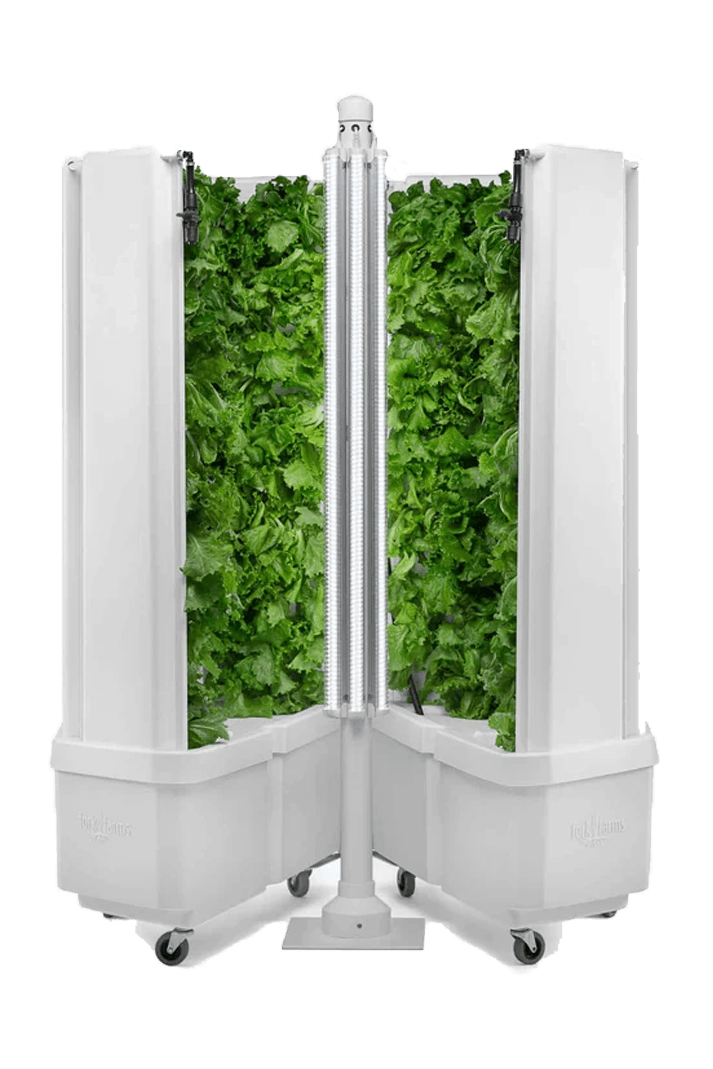
Grow 394+ pounds of fresh produce a year in under 10 square feet — a turnkey indoor vertical farm built for classrooms, cafeterias, and food programs.
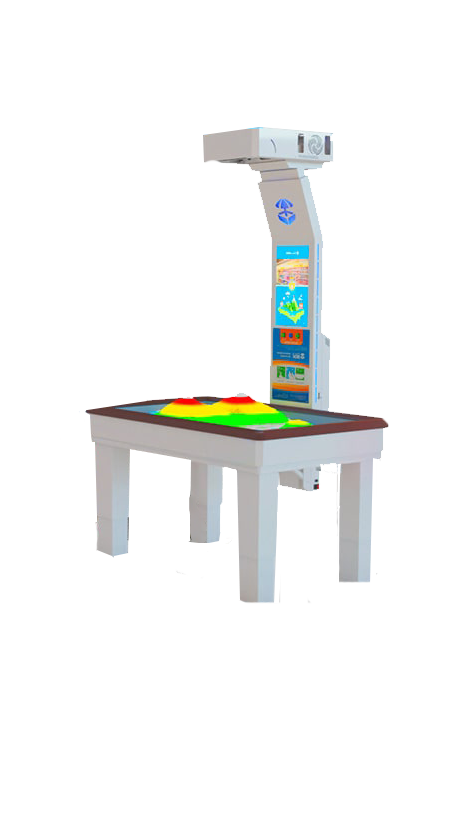
Universal Terminal Systems iSandBox Projected Reality. for Education/STEM. RobotLAB.
Too much to read? Don't have time? Choose your favorite AI, and it will summarize the content for you:
Lidia is an AI assistant. This conversation is stored and shared with the RobotLAB sales and support teams. Privacy policy
Chatting as · Not you?
You choose which categories of cookies are stored on your device. Strictly-necessary cookies are required for the site to function and cannot be disabled. Read more in our Privacy Policy.
Session, security, and the consent record itself. Required for the site to operate.
First-party tracking (Mautic, on t.robotlab.com) so we understand which pages and products visitors engage with and improve the site over time.
Advertising pixels (Google Ads, Meta Pixel) used to measure ad performance and show relevant ads on partner sites. Turning this off opts you out of CCPA "sale" of personal information.