What is the NAO V6 Humanoid Robot?
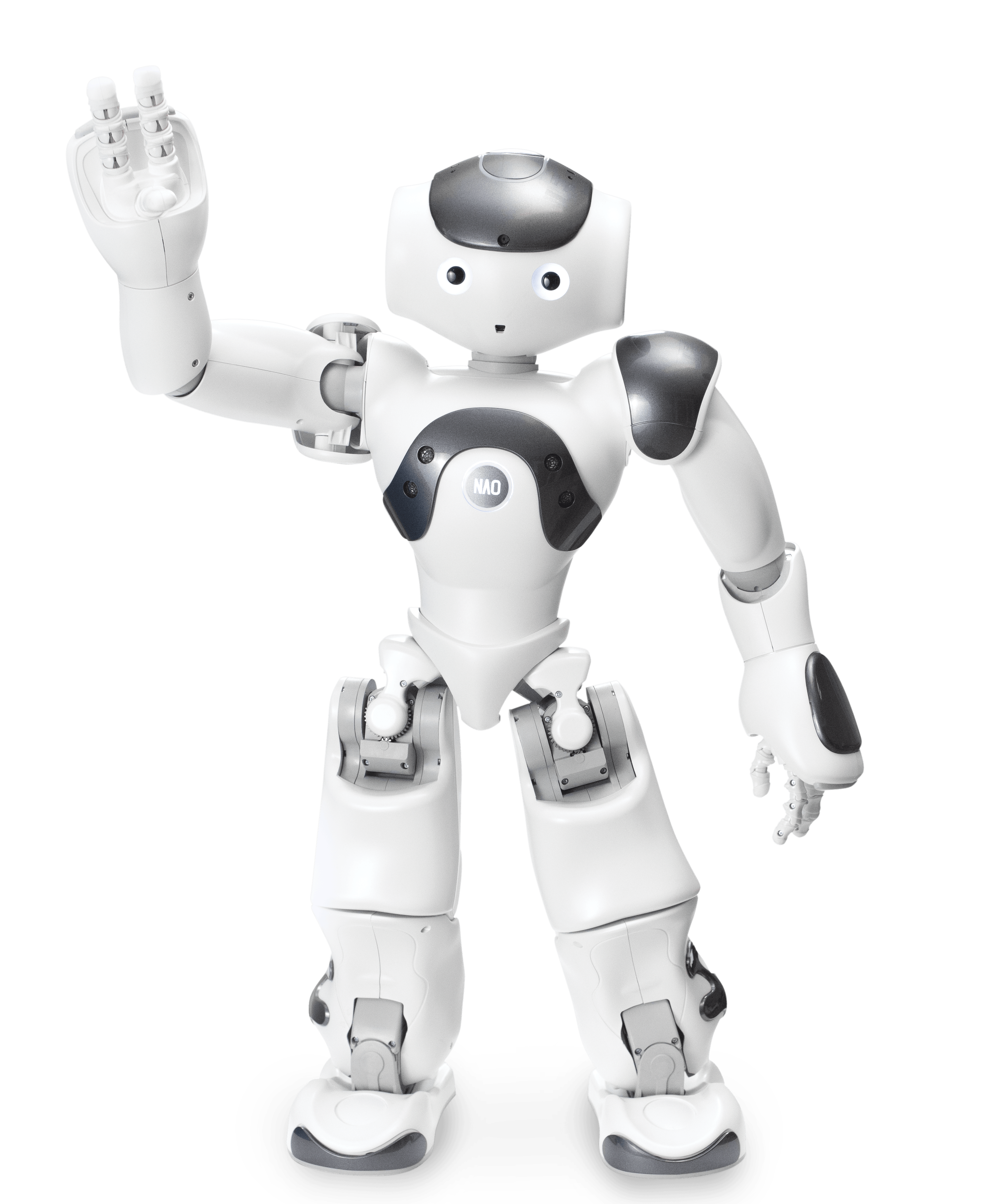
The NAO V6 is a 58 cm (about 23 in) bipedal humanoid robot from SoftBank Robotics / Aldebaran, built to make robotics, coding, and AI tangible for learners of every age. With 25 degrees of freedom, dual HD cameras, four directional microphones, tactile sensors, sonar, and an onboard Intel Atom processor running the NAOqi operating system, NAO can walk, talk, see, listen, dance, and respond to touch — turning abstract STEM concepts into something students can program and watch come to life.
What makes NAO valuable in a classroom is its software ladder. Beginners start with Choregraphe, a visual drag-and-drop block environment, then graduate to writing real Python and C++ against the full SDK and API. The same robot that a 4th grader programs to wave and greet the class can host a graduate research project in human-robot interaction. NAO's expressive movement, multilingual speech (20+ languages), and predictable, gentle interactions also make it a proven tool in special education and autism-support programs, where it provides consistent, low-anxiety engagement.
As a reseller and integrator, RobotLAB sells, leases (RaaS), deploys, trains, and services the NAO V6 nationwide. RobotLAB bundles the robot with a Choregraphe Unlimited license, the SoftBank curriculum, SDK/API access, warranty, and US-based support — so schools and labs get a classroom-ready platform, not just hardware in a box. NAO is trusted by leading institutions and thousands of schools worldwide.
Key specs
| Purchase Price | $16,990 |
| Manufacturer / Brand | SoftBank Robotics / Aldebaran |
| Model | NAO V6 (NAO6) Standard Edition |
| Type | Programmable bipedal humanoid robot |
| Height | 574 mm (approx. 58 cm / 22.6 in) |
| Weight | 5.48 kg (approx. 12.1 lb) |
| Degrees of Freedom | 25 (manufacturer figure; tech sheet joint breakdown lists 26 — see uncertainties) |
| Actuators / Motors | Maxon coreless DC motors |
| CPU | Intel Atom E3845, 1.91 GHz |
| RAM | 4 GB DDR3 |
| Storage | 32 GB eMMC |
| Operating System | NAOqi OS (embedded GNU/Linux, Gentoo-based) |
| Programming | Choregraphe (visual), Python, C++ (SDK/API); Java remote |
| Cameras | 2 front-facing 5 MP (OV5640) HD cameras |
| Microphones | 4 omnidirectional, head-mounted |
| Speakers | 2 x 40 mm loudspeakers |
| Sonar | 2 transmitters/receivers, 40 kHz, 0.20-0.80 m range |
| Inertial Unit | Gyrometer + accelerometer (IMU) |
| Force Sensors | 4 per foot (0-25 N) |
| Tactile / Touch Sensors | Head, hands, and feet (capacitive + bumpers) |
| Battery | Lithium-Ion, 21.6 V / 2.9 Ah (62.5 Wh) |
| Runtime | ~60 min active use, ~90 min normal use |
| Connectivity | Wi-Fi 802.11 a/b/g/n, Gigabit Ethernet (RJ45), Bluetooth 4.0 |
| Languages | 20+ languages supported (speech) |
| Warranty (via RobotLAB) | 1 year + RobotLAB Support Level 1 |
| In the Box (RobotLAB) | NAO V6, charger & battery, Choregraphe Unlimited license, SDK/API, curriculum (PDF), Ethernet cable, 1 language download |
NAO V6 Humanoid Robot in detail
For K-12 STEM classrooms
NAO gives teachers a single platform that scales with the student. Younger learners use Choregraphe's visual blocks to make NAO walk, talk, and react, while older students transition into real Python and C++. Because NAO is a humanoid that physically performs the code students write, abstract programming concepts like loops, conditionals, and sensor input become immediately visible and engaging. RobotLAB ships it with the SoftBank curriculum and lesson materials so teachers can start fast.
For special education and autism support
NAO's consistent, predictable, and emotionally neutral interactions make it a well-documented tool in autism-support and special-education settings. The robot delivers structured prompts, gestures, and speech the same way every time, helping students practice communication, turn-taking, motor skills, and social cues in a low-anxiety environment. Its expressive LEDs, multilingual speech, and gentle movements keep learners engaged while educators direct the session.
For higher-ed and research labs
NAO is one of the most published humanoid platforms in academia and is used at leading universities for robotics, AI, and human-robot interaction research. The full SDK and API, onboard Intel Atom processor, and rich sensor suite (cameras, microphones, sonar, IMU, force and tactile sensors) let researchers prototype perception, navigation, speech, and interaction studies on a standardized, repeatable platform — making published results easier to reproduce across institutions.
For coding and AI demonstrations
Its humanoid form and natural speech make NAO a strong ambassador for outreach, open houses, coding clubs, and AI demonstrations. Schools and organizations use NAO to spark interest in computer science by letting visitors see a robot recognize faces, hold a conversation in multiple languages, and respond to touch — a far more memorable hook than a screen-based demo.
How the NAO V6 Humanoid Robot compares
See the NAO V6 Humanoid Robot
NAO V6 Humanoid Robot in the field
Program it with Choregraphe
Choregraphe is the official visual programming software for NAO and Pepper. Build and test behaviors with a drag-and-drop interface, then deploy them to your robot — download the version that matches your model.
Download Choregraphe →Get pricing & a free demo of the NAO V6 Humanoid Robot.
Same-day response. We handle delivery, on-site setup, staff training, and ongoing service nationwide.
About the NAO V6 Humanoid Robot.
-
What is the NAO V6 robot?
The NAO V6 is a 58 cm (about 23 in) tall programmable bipedal humanoid robot from SoftBank Robotics / Aldebaran. It has 25 degrees of freedom, dual HD cameras, four microphones, tactile sensors, sonar, and an onboard Intel Atom processor running NAOqi OS. NAO can walk, talk, recognize faces and objects, listen, and respond to touch, and it is programmed visually with Choregraphe or in Python and C++. It is the most widely deployed humanoid robot in education and research.
-
What are the key specifications?
NAO V6 stands 574 mm tall, weighs about 5.48 kg, and has 25 degrees of freedom. It runs an Intel Atom E3845 CPU with 4 GB RAM and 32 GB storage on NAOqi OS (a Gentoo-based Linux). Sensors include two 5 MP HD cameras, four directional microphones, two speakers, sonar, an inertial measurement unit, and force and tactile sensors. It connects over Wi-Fi, Gigabit Ethernet, and Bluetooth, supports 20+ spoken languages, and runs roughly 60-90 minutes per charge on its Lithium-Ion battery.
-
How much does the NAO V6 cost and how do I buy it?
RobotLAB sells the NAO V6 Standard Edition for $16,990, which includes the robot, charger and battery, a Choregraphe Unlimited software license, the full SDK and API, SoftBank curriculum, a one-year warranty, and US-based RobotLAB Support Level 1. RobotLAB also offers Robot-as-a-Service (RaaS) leasing and financing. To order, get a quote, or arrange a demo, contact RobotLAB at 1-87-RobotLAB.
-
How does the NAO V6 compare to the SoftBank Pepper?
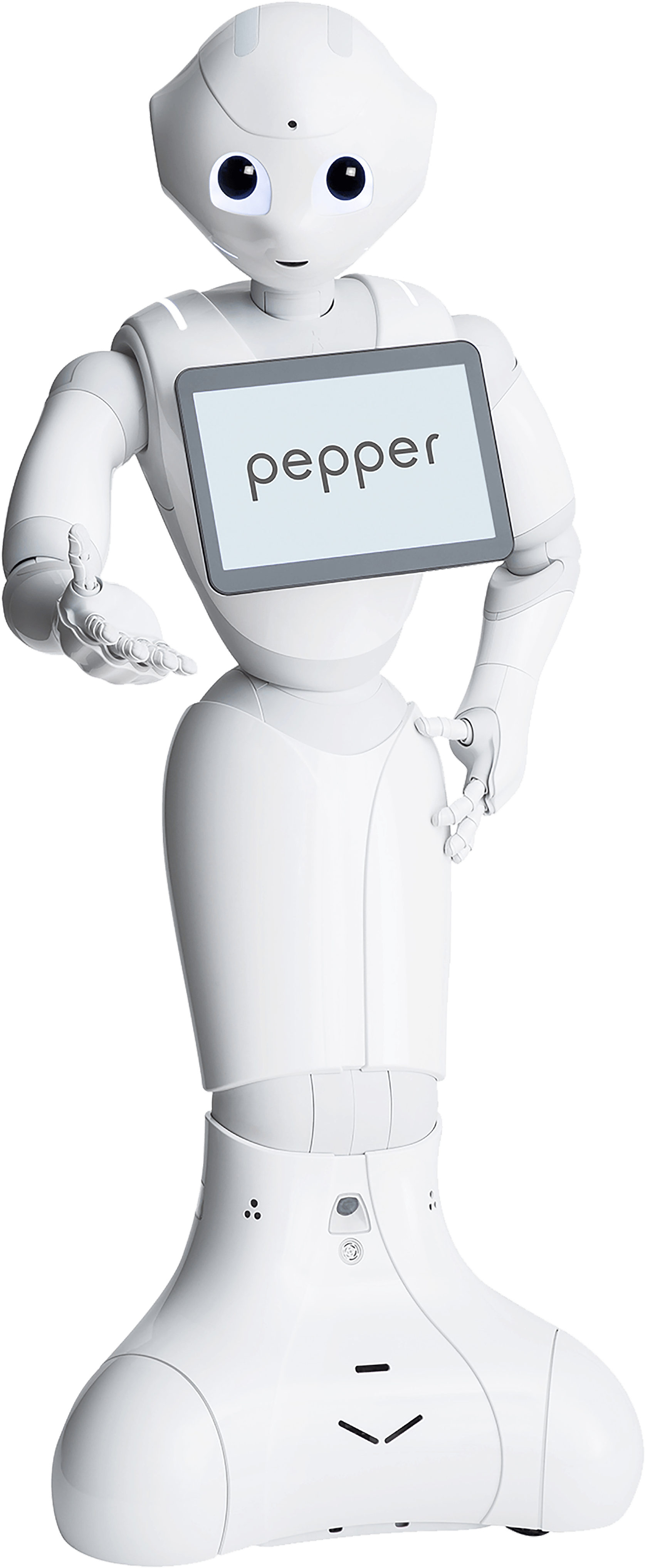
Both are SoftBank humanoids that run NAOqi and program with Choregraphe, but they serve different goals. NAO is a smaller (58 cm) bipedal robot that actually walks and is built for hands-on coding, special education, and research. Pepper is a larger (120 cm) wheeled robot with a chest tablet, designed for retail and hospitality greeting and screen-based engagement, and it was discontinued by SoftBank in 2021. NAO is the better fit for classrooms and labs because it walks, costs less ($16,990 vs about $32,000), and remains in active production.
-
Who is the NAO V6 best suited for?
NAO V6 is ideal for K-12 STEM classrooms, special-education and autism-support programs, higher-education courses, and university research labs. Its software ladder — visual Choregraphe blocks up to full Python and C++ — lets the same robot serve a 4th-grade coding lesson and a graduate human-robot interaction study. Its consistent, gentle, multilingual interactions also make it a proven tool for students with autism and other learning differences.
-
What programming languages and software does it use?
NAO is programmed with Choregraphe, SoftBank's visual drag-and-drop environment that is great for beginners, and with real code via the full SDK and API in Python and C++ (Java is supported for remote control). It runs the NAOqi operating system and ships from RobotLAB with a Choregraphe Unlimited license and curriculum, so educators can teach across skill levels on one platform.
-
Does the NAO V6 actually walk, and how long does the battery last?
Yes — unlike wheeled social robots such as Pepper and ARI, NAO is a true bipedal humanoid that walks, balances, recovers from falls, and performs full-body gestures using its 25 joints. Its Lithium-Ion battery runs approximately 60 minutes under active use and up to about 90 minutes under normal use, with a roughly 90-minute recharge.
More ai labs robots


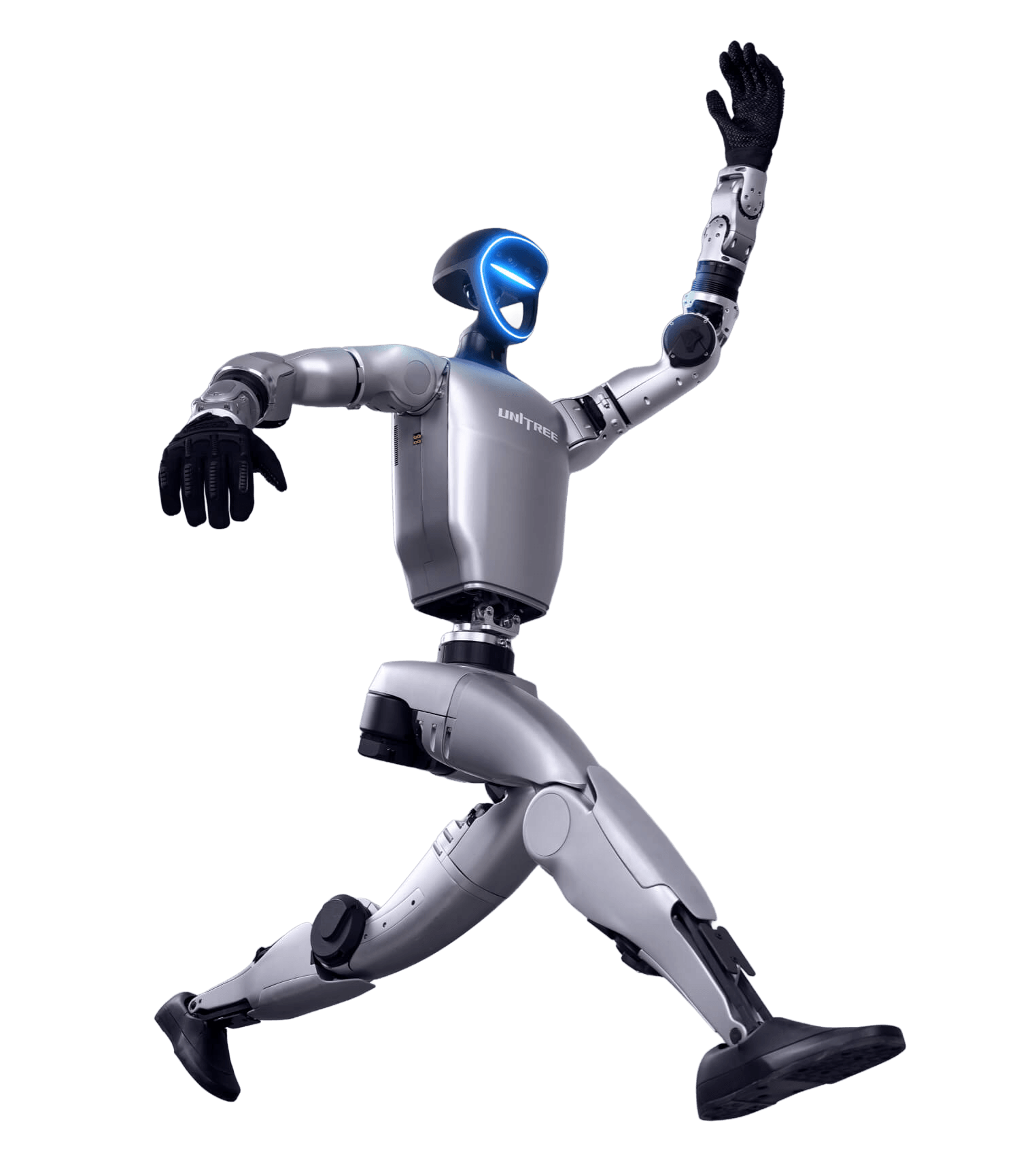
Unitree R1-A5 Dual-Arm Humanoid Robot
The Unitree R1-A5 is a fixed-base dual-arm humanoid: 13 degrees of freedom (5 per arm, 1 waist, 2 head), roughly 11 kg, with a 420 mm arm reach and about 2 kg payload per arm. The R1-A5-D variant adds a wheeled chassis a

Universal Terminal Sysytem iSandbox
Universal Terminal Systems iSandBox Projected Reality. for Education/STEM. RobotLAB.

AgileX Autokit – Research
Turn any AgileX rover into a full-stack autonomous-driving research vehicle — pre-integrated LiDAR, compute, and Autoware software, deployed and supported by RobotLAB.